Paradise Shelduck vs Muscovy Duck
Tadorna variegata versus Cairina moschata
Play a quiz with Paradise Shelduck and Muscovy Duck
Paradise Shelduck
Muscovy Duck
In short
Paradise Shelduck and Muscovy Duck can be distinguished by size, behavior, and habitat preferences. Paradise Shelducks are native to New Zealand and are often found in open habitats, while Muscovy Ducks, native to Central and South America, are partially arboreal and may roost in trees.
Identification tips
- Size: Muscovy Ducks are larger, especially males. 2. Plumage: Look for the distinct sexual dimorphism in Paradise Shelducks. 3. Behavior: Note if the duck is roosting in a tree (likely Muscovy). 4. Habitat: Consider the location; Paradise Shelducks are in New Zealand, while Muscovy Ducks are native to the Americas but domesticated worldwide. 5. Vocalizations: Listen for the honking of Paradise Shelducks versus the quieter sounds of Muscovy Ducks.
Size
Muscovy Ducks are significantly larger than Paradise Shelducks, with males being particularly large.
Plumage
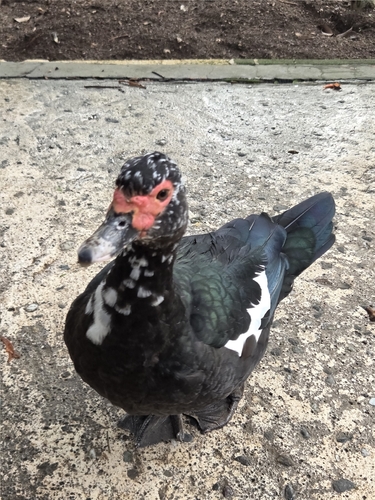
Paradise Shelducks have a striking sexual dimorphism: males are dark with a white head, while females have a chestnut body with a white head. Muscovy Ducks, on the other hand, have less sexual dimorphism in plumage and are typically dark with iridescent greenish-black feathers, though domestic varieties may vary.
Behaviour
Muscovy Ducks are partially arboreal, often roosting in trees and nesting in tree cavities, while Paradise Shelducks are ground-nesters and are often seen grazing in open fields.
Habitat
Paradise Shelducks are found in open habitats like pastures and wetlands in New Zealand. Muscovy Ducks prefer wooded areas near water in their native range, but domestic types can be found in a variety of habitats.
Voice
Paradise Shelducks are known for their loud, honking calls. Muscovy Ducks are generally quieter, often making soft hissing or croaking sounds.