Birdr

Parrot Crossbill vs Common Crossbill

Loxia pytyopsittacus versus Loxia curvirostra

Play a quiz with Parrot Crossbill and Common Crossbill

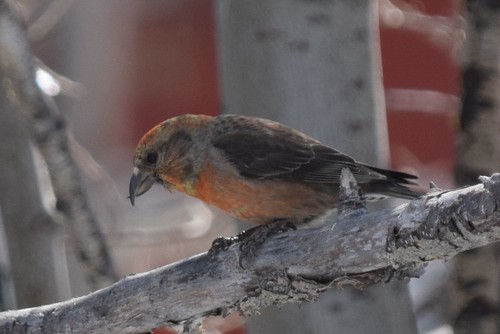
Parrot Crossbill (Loxia pytyopsittacus) Parrot Crossbill
Common Crossbill (Loxia curvirostra) Common Crossbill

Media

Loading…

In short

The Parrot Crossbill and Common Crossbill are similar finches with specialized bills for extracting seeds from conifer cones. The Parrot Crossbill has a notably larger and thicker bill, which is the most reliable field mark. Both species have similar plumage, but subtle differences in vocalizations and habitat preferences can aid identification.

Identification tips

Size

Parrot Crossbill is slightly larger and more robust than the Common Crossbill.

Plumage

Both species exhibit similar plumage with red males and greenish females, making color a less reliable distinguishing feature.

Behaviour

Both species are nomadic, following conifer seed availability, and exhibit similar foraging behaviors.

Habitat

Parrot Crossbill is more often found in mature conifer forests, particularly those with Scots Pine, while Common Crossbill is more adaptable to various coniferous habitats.

Voice

Vocalizations differ subtly; the Parrot Crossbill has a deeper, more resonant call compared to the Common Crossbill's varied call types. However, these differences can be challenging to discern without experience.

Submit a better description

Use the same sections as the comparison. Your text is published immediately.

The Parrot Crossbill and Common Crossbill are similar finches with specialized bills for extracting seeds from conifer cones. The Parrot Crossbill has a notably larger and thicker bill, which is the most reliable field mark. Both species have similar plumage, but subtle differences in vocalizations and habitat preferences can aid identification.

  • Bill Size: Parrot Crossbill has a larger, thicker bill compared to the Common Crossbill.
  • Vocalization: Listen for the deeper calls of the Parrot Crossbill.
  • Habitat: Check for presence in mature conifer forests, especially with Scots Pine, which may indicate Parrot Crossbill.
  • Size and Shape: Note the slightly larger size and more robust shape of the Parrot Crossbill.

Parrot Crossbill is slightly larger and more robust than the Common Crossbill.

Both species exhibit similar plumage with red males and greenish females, making color a less reliable distinguishing feature.

Both species are nomadic, following conifer seed availability, and exhibit similar foraging behaviors.

Parrot Crossbill is more often found in mature conifer forests, particularly those with Scots Pine, while Common Crossbill is more adaptable to various coniferous habitats.

Vocalizations differ subtly; the Parrot Crossbill has a deeper, more resonant call compared to the Common Crossbill's varied call types. However, these differences can be challenging to discern without experience.

Discard your changes?

You have unsaved edits. If you leave now, those changes will be lost.

Parrot Crossbill · Common Crossbill · My Tricky Birds