Parrot Crossbill vs Scottish Crossbill
Loxia pytyopsittacus versus Loxia scotica
Play a quiz with Parrot Crossbill and Scottish Crossbill
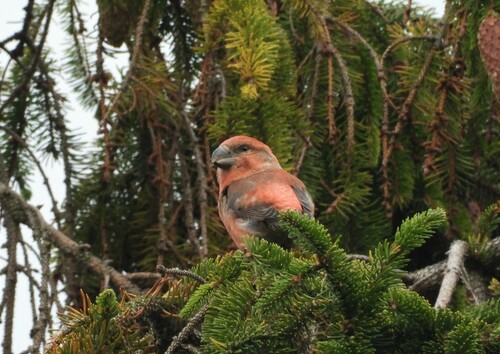
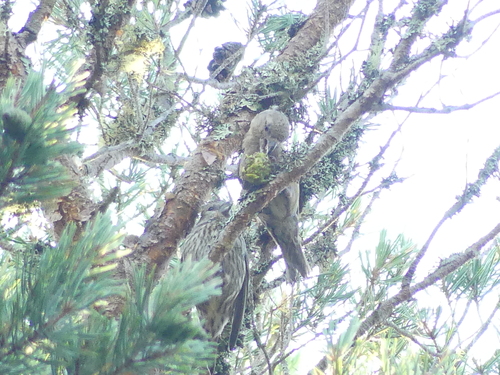
Parrot Crossbill
Scottish Crossbill
In short
Parrot Crossbill and Scottish Crossbill are nearly identical in plumage, making them challenging to distinguish visually. The most reliable way to differentiate them is through their vocalizations, which require recording and sonogram analysis. Habitat can also provide clues, as Scottish Crossbill is endemic to Scotland's Caledonian pinewoods.
Identification tips
- Listen for calls: Record and analyze the metallic calls of the Scottish Crossbill. 2. Check habitat: Scottish Crossbill is restricted to Scotland's pinewoods, while Parrot Crossbill is more widespread. 3. Observe behavior: Note any nomadic behavior, which might suggest Parrot Crossbill. Visual identification is unreliable due to similar plumage.
Size
Both species are similar in size, around 17 cm in length.
Plumage
Both species exhibit similar plumage: males are brick-red to orange, and females are olive-green to grayish yellow, with dark brown wings and a short, notched tail.
Behaviour
Scottish Crossbill is largely sedentary, while Parrot Crossbill may be more nomadic, especially outside the breeding season.
Habitat
Scottish Crossbill is found in native Caledonian pinewoods and commercial plantations in eastern Scotland, while Parrot Crossbill is more widespread across northern Europe.
Voice
Scottish Crossbill has distinctive metallic flight and excitement calls that are key to identification, requiring sonogram analysis. Parrot Crossbill's calls differ but also require careful listening and analysis.