Birdr

Parrot Crossbill vs Two-barred Crossbill

Loxia pytyopsittacus versus Loxia leucoptera

Play a quiz with Parrot Crossbill and Two-barred Crossbill
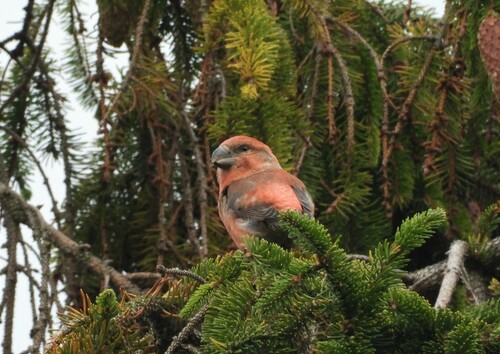
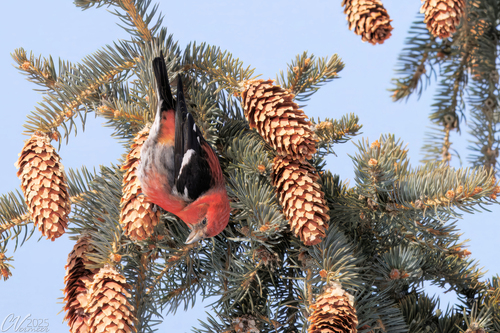
Parrot Crossbill (Loxia pytyopsittacus) Parrot Crossbill
Two-barred Crossbill (Loxia leucoptera) Two-barred Crossbill

Media

Loading…

In short

The Parrot Crossbill and Two-barred Crossbill can be tricky to differentiate, but key differences in bill size and wing markings can help. Parrot Crossbills have a notably larger and deeper bill, while Two-barred Crossbills feature distinct white wing bars.

Identification tips

Size

Parrot Crossbills are slightly larger and bulkier than Two-barred Crossbills.

Plumage

Two-barred Crossbills have two prominent white wing bars, which are absent in Parrot Crossbills. Parrot Crossbills have a more uniform plumage without these contrasting wing markings.

Behaviour

Both species are nomadic and often found in flocks, feeding on conifer seeds. Their behavior is similar in terms of feeding and movement patterns.

Habitat

Both species inhabit coniferous forests, but the Two-barred Crossbill is more likely to be found in areas with a higher density of spruce trees.

Voice

Vocalizations are similar, but the Two-barred Crossbill has a slightly higher-pitched call. However, distinguishing them by call alone can be challenging.

Submit a better description

Use the same sections as the comparison. Your text is published immediately.

The Parrot Crossbill and Two-barred Crossbill can be tricky to differentiate, but key differences in bill size and wing markings can help. Parrot Crossbills have a notably larger and deeper bill, while Two-barred Crossbills feature distinct white wing bars.

  • Bill size: Parrot Crossbill has a larger, deeper bill.
  • Wing bars: Look for the two white wing bars on the Two-barred Crossbill.
  • Plumage: Note the more uniform plumage of the Parrot Crossbill.
  • Habitat preference: Check for spruce dominance, which may indicate Two-barred Crossbill presence.

Parrot Crossbills are slightly larger and bulkier than Two-barred Crossbills.

Two-barred Crossbills have two prominent white wing bars, which are absent in Parrot Crossbills. Parrot Crossbills have a more uniform plumage without these contrasting wing markings.

Both species are nomadic and often found in flocks, feeding on conifer seeds. Their behavior is similar in terms of feeding and movement patterns.

Both species inhabit coniferous forests, but the Two-barred Crossbill is more likely to be found in areas with a higher density of spruce trees.

Vocalizations are similar, but the Two-barred Crossbill has a slightly higher-pitched call. However, distinguishing them by call alone can be challenging.

Discard your changes?

You have unsaved edits. If you leave now, those changes will be lost.

Parrot Crossbill · Two-barred Crossbill · My Tricky Birds