Birdr

Phainopepla vs Palmchat

Phainopepla nitens versus Dulus dominicus

Play a quiz with Phainopepla and Palmchat
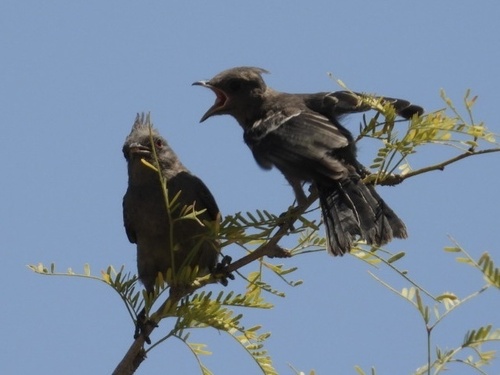
Phainopepla (Phainopepla nitens) Phainopepla
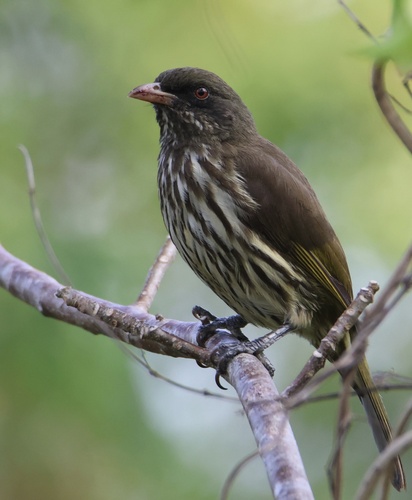
Palmchat (Dulus dominicus) Palmchat

Media

Loading…

In short

The Phainopepla and Palmchat are distinct in appearance and behavior, making them relatively easy to differentiate in the field. The Phainopepla is known for its glossy black plumage and white wing patches in males, while the Palmchat has a more subdued brown and white streaked appearance. Their habitats and behaviors also differ significantly, with Phainopeplas found in North American deserts and woodlands, and Palmchats being endemic to the Dominican Republic.

Identification tips

Look for the glossy black plumage and white wing patches in male Phainopeplas. Note the streaked brown and white appearance of Palmchats. Consider habitat: Phainopeplas are found in North American deserts and woodlands, while Palmchats are only in the Dominican Republic. Observe behavior: Phainopeplas are solitary or in pairs, while Palmchats are social and often in groups.

Size

Both species are similar in size, but the Phainopepla has a more slender and elongated appearance due to its long tail.

Plumage

Phainopepla males are glossy black with striking white wing patches, while females are gray. Palmchats have brown upperparts with white streaking and are generally more muted in color.

Behaviour

Phainopeplas are often seen fluttering and zigzagging in pursuit of insects, while Palmchats are more social, often found in groups and building large communal nests.

Habitat

Phainopeplas inhabit desert and woodland areas in North America, while Palmchats are restricted to the Dominican Republic, often found in palm groves and gardens.

Voice

Phainopeplas have a varied song with whistles and trills, whereas Palmchats have a chattering call. Specific vocalizations are not well-documented for quick field identification.

Submit a better description

Use the same sections as the comparison. Your text is published immediately.

The Phainopepla and Palmchat are distinct in appearance and behavior, making them relatively easy to differentiate in the field. The Phainopepla is known for its glossy black plumage and white wing patches in males, while the Palmchat has a more subdued brown and white streaked appearance. Their habitats and behaviors also differ significantly, with Phainopeplas found in North American deserts and woodlands, and Palmchats being endemic to the Dominican Republic.

Look for the glossy black plumage and white wing patches in male Phainopeplas. Note the streaked brown and white appearance of Palmchats. Consider habitat: Phainopeplas are found in North American deserts and woodlands, while Palmchats are only in the Dominican Republic. Observe behavior: Phainopeplas are solitary or in pairs, while Palmchats are social and often in groups.

Both species are similar in size, but the Phainopepla has a more slender and elongated appearance due to its long tail.

Phainopepla males are glossy black with striking white wing patches, while females are gray. Palmchats have brown upperparts with white streaking and are generally more muted in color.

Phainopeplas are often seen fluttering and zigzagging in pursuit of insects, while Palmchats are more social, often found in groups and building large communal nests.

Phainopeplas inhabit desert and woodland areas in North America, while Palmchats are restricted to the Dominican Republic, often found in palm groves and gardens.

Phainopeplas have a varied song with whistles and trills, whereas Palmchats have a chattering call. Specific vocalizations are not well-documented for quick field identification.

Discard your changes?

You have unsaved edits. If you leave now, those changes will be lost.

Phainopepla · Palmchat · My Tricky Birds