Birdr

Philadelphia Vireo vs Sedge Wren

Vireo philadelphicus versus Cistothorus stellaris

Play a quiz with Philadelphia Vireo and Sedge Wren
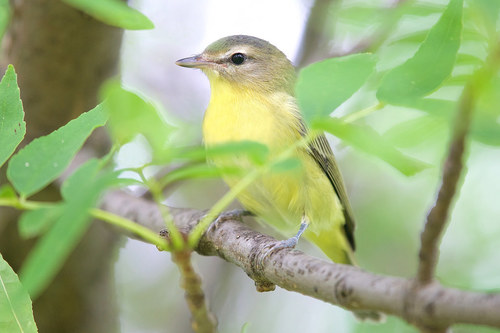
Philadelphia Vireo (Vireo philadelphicus) Philadelphia Vireo
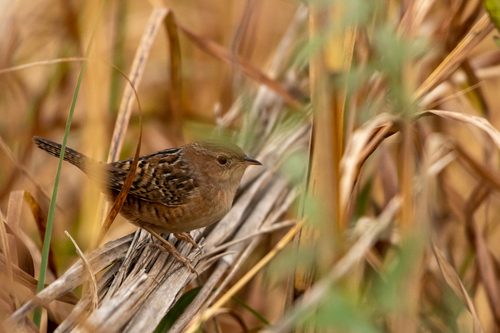
Sedge Wren (Cistothorus stellaris) Sedge Wren

Media

Loading…

In short

The Philadelphia Vireo and Sedge Wren are distinct in appearance and habitat, making them unlikely to be confused in the field. The Philadelphia Vireo is a small, olive-green songbird with a distinct yellow wash on its underparts, while the Sedge Wren is a small, brown bird with a streaked back and a short tail. Their habitats also differ significantly, with the vireo favoring forests and the wren preferring wet meadows.

Identification tips

Size

Both species are small, but the Philadelphia Vireo is slightly larger and more robust compared to the more delicate Sedge Wren.

Plumage

The Philadelphia Vireo has olive-green upperparts and a yellowish wash on its underparts, with a faint eyebrow stripe. The Sedge Wren, on the other hand, has brown, streaked upperparts and a buffy, unstreaked belly, with a more pronounced white eyebrow.

Behaviour

Philadelphia Vireos are often seen foraging in trees, while Sedge Wrens are more likely to be found skulking in dense grass and sedge habitats.

Habitat

Philadelphia Vireos are typically found in deciduous forests and successional woodlands, whereas Sedge Wrens inhabit wet meadows and marshes.

Voice

Philadelphia Vireos have a song similar to the Red-eyed Vireo but shorter and more variable. Sedge Wrens have a distinctive, dry, rattling song that is quite different from the vireo's.

Submit a better description

Use the same sections as the comparison. Your text is published immediately.

The Philadelphia Vireo and Sedge Wren are distinct in appearance and habitat, making them unlikely to be confused in the field. The Philadelphia Vireo is a small, olive-green songbird with a distinct yellow wash on its underparts, while the Sedge Wren is a small, brown bird with a streaked back and a short tail. Their habitats also differ significantly, with the vireo favoring forests and the wren preferring wet meadows.

  • Habitat: Look for Philadelphia Vireos in forested areas and Sedge Wrens in marshy, grassy fields.
  • Plumage: Note the olive-green and yellowish tones of the vireo versus the brown, streaked appearance of the wren.
  • Vocalization: Listen for the vireo's short, variable song compared to the wren's dry, rattling song.

Both species are small, but the Philadelphia Vireo is slightly larger and more robust compared to the more delicate Sedge Wren.

The Philadelphia Vireo has olive-green upperparts and a yellowish wash on its underparts, with a faint eyebrow stripe. The Sedge Wren, on the other hand, has brown, streaked upperparts and a buffy, unstreaked belly, with a more pronounced white eyebrow.

Philadelphia Vireos are often seen foraging in trees, while Sedge Wrens are more likely to be found skulking in dense grass and sedge habitats.

Philadelphia Vireos are typically found in deciduous forests and successional woodlands, whereas Sedge Wrens inhabit wet meadows and marshes.

Philadelphia Vireos have a song similar to the Red-eyed Vireo but shorter and more variable. Sedge Wrens have a distinctive, dry, rattling song that is quite different from the vireo's.

Discard your changes?

You have unsaved edits. If you leave now, those changes will be lost.

Philadelphia Vireo · Sedge Wren · My Tricky Birds