Pied-billed Grebe vs Slavonian Grebe
Podilymbus podiceps versus Podiceps auritus
Play a quiz with Pied-billed Grebe and Slavonian Grebe
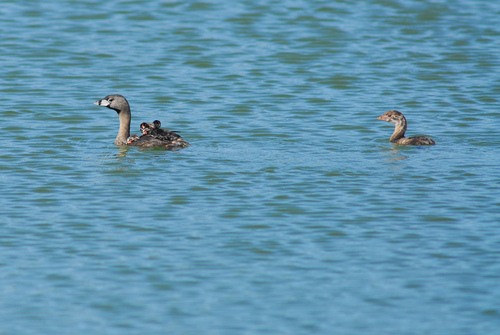
Pied-billed Grebe
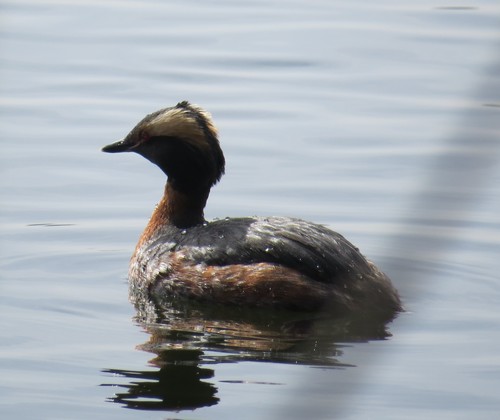
Slavonian Grebe
In short
The Pied-billed Grebe and Slavonian Grebe can be distinguished by their bills and plumage. The Pied-billed Grebe has a distinctive short, thick bill with a black vertical bar during the breeding season, while the Slavonian Grebe has a more slender bill and striking chestnut neck and flanks in breeding plumage. Both species are often found in similar wetland habitats, but their vocalizations and behavior can also aid in identification.
Identification tips
1. Bill: Look for the Pied-billed Grebe's short, thick bill with a black bar during the breeding season. 2. Plumage: In breeding season, note the Slavonian Grebe's chestnut neck and flanks. 3. Behavior: Observe diving behavior; both dive but the Pied-billed Grebe is more secretive. 4. Habitat: Consider the location; Pied-billed Grebes are more widespread in the Americas. 5. Vocalization: Listen for the Pied-billed Grebe's 'caow' calls.
Size
Both species are small grebes, but the Pied-billed Grebe is generally more robust with a thicker neck and body compared to the more slender Slavonian Grebe.
Plumage
The Pied-billed Grebe is mostly brown with a bluish-white bill featuring a black bar during breeding. The Slavonian Grebe, in breeding plumage, has a striking chestnut neck and flanks with a contrasting black head and golden ear tufts.
Behaviour
Pied-billed Grebes are known for their secretive nature, often diving to escape danger. Slavonian Grebes also dive but are noted for their elaborate courtship displays. Both species are aggressive towards intruders.
Habitat
Both species inhabit freshwater marshes and lakes, but the Pied-billed Grebe has a wider range across the Americas, while the Slavonian Grebe is found in Holarctic regions.
Voice
The Pied-billed Grebe has a distinctive 'caow caow caow' call, often heard before the bird is seen. Slavonian Grebe vocalizations are less frequently noted in field guides.