Pied Bushchat vs Mourning Wheatear
Saxicola caprata versus Oenanthe lugens
Play a quiz with Pied Bushchat and Mourning Wheatear
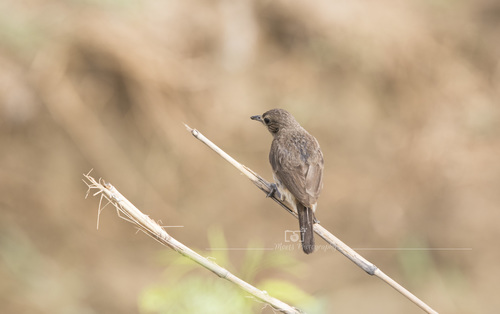
Pied Bushchat
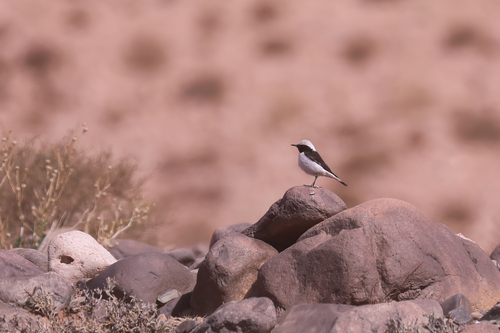
Mourning Wheatear
In short
The Pied Bushchat and Mourning Wheatear can be tricky to differentiate, but key distinctions lie in their plumage and behavior. The Pied Bushchat typically has a more uniform black appearance with a white rump, while the Mourning Wheatear shows a contrasting black and white plumage with a distinctive white crown and back. Observing their habitats and behaviors can also aid identification.
Identification tips
- Look for the white crown and back in the Mourning Wheatear, absent in the Pied Bushchat. 2. Check the habitat: Mourning Wheatears prefer rocky, arid areas, while Pied Bushchats are found in open fields. 3. Observe behavior: both perch prominently, but habitat can guide you. 4. Use vocalizations cautiously; they are not the most reliable for differentiation.
Size
Both species are similar in size, typical of small passerines, but the Mourning Wheatear may appear slightly larger and more robust.
Plumage
The Pied Bushchat is predominantly black with a white rump, lacking the contrasting white crown and back seen in the Mourning Wheatear. The Mourning Wheatear displays a striking black and white contrast, with a white crown and back, and a black face and throat.
Behaviour
Both species exhibit similar behaviors such as perching prominently and making short flights to catch insects. However, the Mourning Wheatear may be more likely to be seen in rocky or desert environments, reflecting its habitat preference.
Habitat
Pied Bushchats are often found in open fields, grasslands, and agricultural areas, while Mourning Wheatears prefer rocky deserts and arid regions. This can be a useful clue when identifying them in the field.
Voice
Vocalizations are not the most reliable distinguishing feature, as both species have varied calls and songs typical of Old World flycatchers. However, if heard, the Mourning Wheatear's song may be more melodious compared to the Pied Bushchat.