Birdr

Pied Wheatear vs Finsch's Wheatear

Oenanthe pleschanka versus Oenanthe finschii

Play a quiz with Pied Wheatear and Finsch's Wheatear
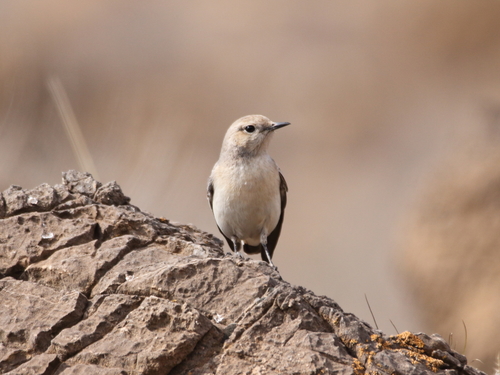
Pied Wheatear (Oenanthe pleschanka) Pied Wheatear
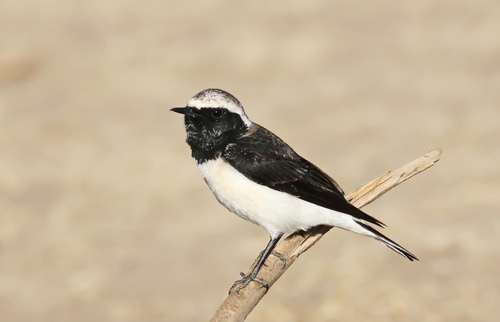
Finsch's Wheatear (Oenanthe finschii) Finsch's Wheatear

Media

Loading…

In short

Pied Wheatear and Finsch's Wheatear can be tricky to differentiate, but the most reliable field mark is the tail pattern. Pied Wheatear typically has a more extensive white base to the tail, while Finsch's Wheatear shows a more restricted white area. Additionally, the males of both species show different plumage tones, especially in breeding season.

Identification tips

  1. Tail Pattern: Look for the extent of white in the tail; Pied Wheatear shows more white. 2. Male Plumage: In breeding season, check the head pattern; Pied Wheatear has a contrasting white crown. 3. Habitat: Consider the habitat; Finsch's Wheatear is more likely in mountainous areas. 4. Seasonal Variation: Be cautious of seasonal plumage changes, especially in females.

Size

Both species are similar in size, typical of wheatears, with no significant differences in structure.

Plumage

Male Pied Wheatears in breeding plumage have a black throat and face with a contrasting white crown and nape, while Finsch's Wheatear males have a more uniform black head and throat. Females of both species are more challenging to separate, but Pied Wheatear females tend to have a slightly paler and more uniform appearance.

Behaviour

Both species exhibit similar behavior, often seen perched on rocks or low shrubs, making short flights to catch insects.

Habitat

Both species prefer open, rocky habitats but can overlap in range. Pied Wheatear is more likely to be found in steppe and semi-desert regions, while Finsch's Wheatear favors rocky slopes and mountainous areas.

Voice

Vocalizations are similar, with both species producing a series of short, harsh calls. Detailed differences in song are subtle and may require experience to discern.

Submit a better description

Use the same sections as the comparison. Your text is published immediately.

Pied Wheatear and Finsch's Wheatear can be tricky to differentiate, but the most reliable field mark is the tail pattern. Pied Wheatear typically has a more extensive white base to the tail, while Finsch's Wheatear shows a more restricted white area. Additionally, the males of both species show different plumage tones, especially in breeding season.

  1. Tail Pattern: Look for the extent of white in the tail; Pied Wheatear shows more white. 2. Male Plumage: In breeding season, check the head pattern; Pied Wheatear has a contrasting white crown. 3. Habitat: Consider the habitat; Finsch's Wheatear is more likely in mountainous areas. 4. Seasonal Variation: Be cautious of seasonal plumage changes, especially in females.

Both species are similar in size, typical of wheatears, with no significant differences in structure.

Male Pied Wheatears in breeding plumage have a black throat and face with a contrasting white crown and nape, while Finsch's Wheatear males have a more uniform black head and throat. Females of both species are more challenging to separate, but Pied Wheatear females tend to have a slightly paler and more uniform appearance.

Both species exhibit similar behavior, often seen perched on rocks or low shrubs, making short flights to catch insects.

Both species prefer open, rocky habitats but can overlap in range. Pied Wheatear is more likely to be found in steppe and semi-desert regions, while Finsch's Wheatear favors rocky slopes and mountainous areas.

Vocalizations are similar, with both species producing a series of short, harsh calls. Detailed differences in song are subtle and may require experience to discern.

Discard your changes?

You have unsaved edits. If you leave now, those changes will be lost.

Pied Wheatear · Finsch's Wheatear · My Tricky Birds