Birdr

Pied Wheatear vs Variable Wheatear

Oenanthe pleschanka versus Oenanthe picata

Play a quiz with Pied Wheatear and Variable Wheatear
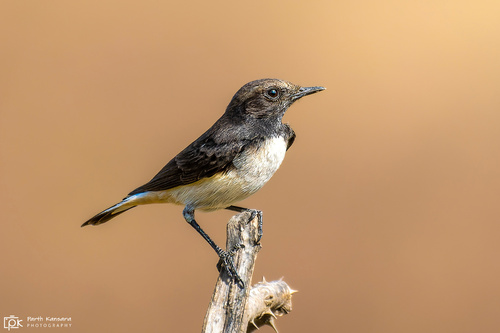
Pied Wheatear (Oenanthe pleschanka) Pied Wheatear
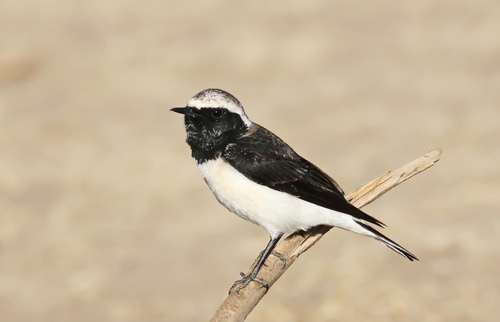
Variable Wheatear (Oenanthe picata) Variable Wheatear

Media

Loading…

In short

The Pied Wheatear and Variable Wheatear are both small, ground-dwelling birds with similar structures, but they can be distinguished by their plumage patterns. The Pied Wheatear typically has a more distinct black-and-white contrast, while the Variable Wheatear shows more variability in plumage, often with less stark contrast. Observing tail patterns and habitat preferences can aid in identification.

Identification tips

Size

Both species are similar in size, typical of wheatears, with no significant differences in structure.

Plumage

The Pied Wheatear usually displays a clear black-and-white plumage with a striking black mask and white rump, whereas the Variable Wheatear can show more variation, including all-black morphs or less defined black-and-white contrasts. The Pied Wheatear's tail pattern is more distinct with a T-shaped black terminal band.

Behaviour

Both species exhibit similar behaviors, often seen perching on rocks or low shrubs and making short flights to catch insects.

Habitat

Pied Wheatears are typically found in open, rocky terrains and semi-deserts, while Variable Wheatears also inhabit similar areas but can be found in a broader range of dry habitats.

Voice

Vocalizations are not the most reliable differentiator as both species have similar calls, but the Pied Wheatear's song might be slightly more varied.

Submit a better description

Use the same sections as the comparison. Your text is published immediately.

The Pied Wheatear and Variable Wheatear are both small, ground-dwelling birds with similar structures, but they can be distinguished by their plumage patterns. The Pied Wheatear typically has a more distinct black-and-white contrast, while the Variable Wheatear shows more variability in plumage, often with less stark contrast. Observing tail patterns and habitat preferences can aid in identification.

  • Look for the distinct tail pattern in the Pied Wheatear, with a clear T-shaped black terminal band.
  • Observe the plumage contrast: Pied Wheatears have a more defined black-and-white pattern, while Variable Wheatears can be more variable.
  • Consider the habitat: Pied Wheatears prefer rocky terrains, whereas Variable Wheatears can be found in a wider range of dry environments.
  • Be cautious of plumage variability in Variable Wheatears, which can include all-black morphs.

Both species are similar in size, typical of wheatears, with no significant differences in structure.

The Pied Wheatear usually displays a clear black-and-white plumage with a striking black mask and white rump, whereas the Variable Wheatear can show more variation, including all-black morphs or less defined black-and-white contrasts. The Pied Wheatear's tail pattern is more distinct with a T-shaped black terminal band.

Both species exhibit similar behaviors, often seen perching on rocks or low shrubs and making short flights to catch insects.

Pied Wheatears are typically found in open, rocky terrains and semi-deserts, while Variable Wheatears also inhabit similar areas but can be found in a broader range of dry habitats.

Vocalizations are not the most reliable differentiator as both species have similar calls, but the Pied Wheatear's song might be slightly more varied.

Discard your changes?

You have unsaved edits. If you leave now, those changes will be lost.

Pied Wheatear · Variable Wheatear · My Tricky Birds