
Pin-tailed Sandgrouse vs Little Bustard
Pterocles alchata versus Tetrax tetrax
Play a quiz with Pin-tailed Sandgrouse and Little Bustard
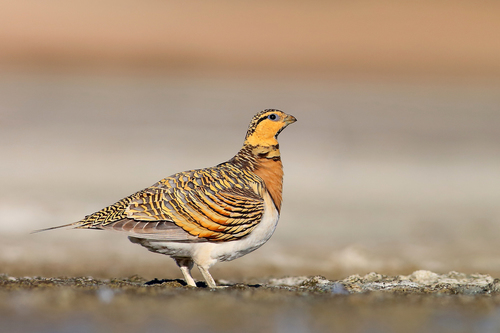 Pin-tailed Sandgrouse
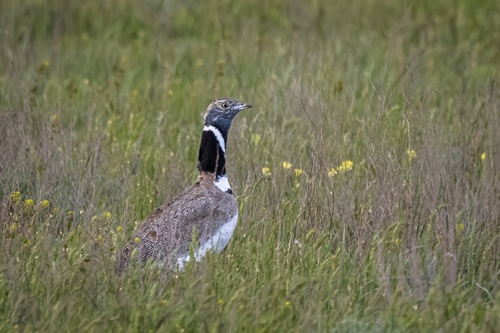 Little Bustard
In short
The Pin-tailed Sandgrouse and Little Bustard can be distinguished by their overall shape and behavior. The sandgrouse has a more compact body with a distinctive long, pointed tail, while the bustard is larger and more robust. Observing their flight patterns and preferred habitats can also aid in identification.
Identification tips
Look for the long, pointed tail of the Pin-tailed Sandgrouse, especially in flight. Observe the flight pattern: sandgrouse fly rapidly in flocks, whereas bustards have a slower, more solitary flight. Consider the habitat: sandgrouse in arid areas, bustards in grasslands.
Size
The Little Bustard is larger and more robust compared to the more compact Pin-tailed Sandgrouse.
Behaviour
Pin-tailed Sandgrouse often fly in flocks and have a rapid, direct flight. Little Bustards are more solitary or found in small groups and display a slower, more deliberate flight.
Habitat
Pin-tailed Sandgrouse prefer open, arid environments, while Little Bustards are typically found in grasslands and agricultural fields.