Birdr

Pin-tailed Snipe vs Common Snipe

Gallinago stenura versus Gallinago gallinago

Play a quiz with Pin-tailed Snipe and Common Snipe
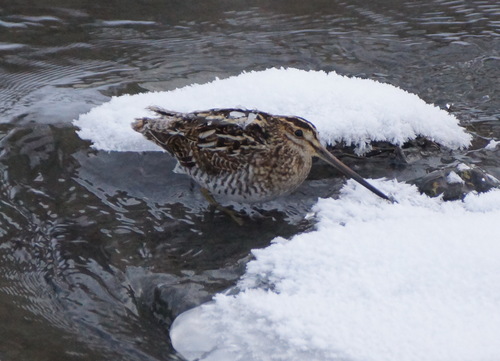
Pin-tailed Snipe (Gallinago stenura) Pin-tailed Snipe
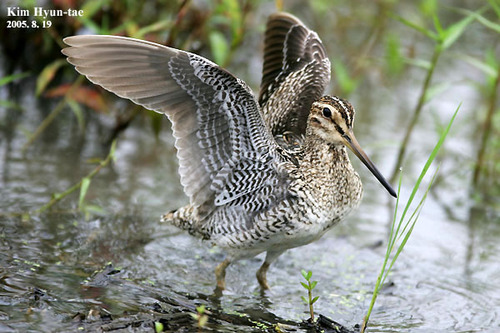
Common Snipe (Gallinago gallinago) Common Snipe

Media

Loading…

In short

The Pin-tailed Snipe and Common Snipe are similar in appearance but can be distinguished by their tail and wing structure. The Pin-tailed Snipe has a more pointed tail and shorter primary projection compared to the Common Snipe. Vocalizations differ, with the Common Snipe having a distinctive 'drumming' display sound.

Identification tips

  1. Look for the tail shape: Pin-tailed Snipe has a more pointed tail. 2. Check the primary projection: Common Snipe has longer primary projection beyond the tail. 3. Listen for the drumming display: Common Snipe performs this during breeding season. 4. Observe the habitat range: Common Snipe is more likely in Europe, while Pin-tailed Snipe is more common in Asia.

Size

Both species are similar in size, though the Pin-tailed Snipe may appear slightly more compact due to its shorter primary projection.

Plumage

Plumage is generally similar, with both species exhibiting cryptic brown and buff patterns. The Pin-tailed Snipe has a more pointed tail, which can be a subtle difference in flight.

Behaviour

Both species exhibit similar foraging behavior, probing mud or soft ground for invertebrates. They are often seen in similar habitats and can be difficult to distinguish by behavior alone.

Habitat

Both species inhabit wetland areas, including marshes and wet meadows. The Common Snipe is more widespread in Europe, while the Pin-tailed Snipe is more common in Asia.

Voice

The Common Snipe is known for its 'drumming' sound during display flights, which is absent in the Pin-tailed Snipe. Calls can be similar, with both producing a 'chip' or 'tick' sound.

Submit a better description

Use the same sections as the comparison. Your text is published immediately.

The Pin-tailed Snipe and Common Snipe are similar in appearance but can be distinguished by their tail and wing structure. The Pin-tailed Snipe has a more pointed tail and shorter primary projection compared to the Common Snipe. Vocalizations differ, with the Common Snipe having a distinctive 'drumming' display sound.

  1. Look for the tail shape: Pin-tailed Snipe has a more pointed tail. 2. Check the primary projection: Common Snipe has longer primary projection beyond the tail. 3. Listen for the drumming display: Common Snipe performs this during breeding season. 4. Observe the habitat range: Common Snipe is more likely in Europe, while Pin-tailed Snipe is more common in Asia.

Both species are similar in size, though the Pin-tailed Snipe may appear slightly more compact due to its shorter primary projection.

Plumage is generally similar, with both species exhibiting cryptic brown and buff patterns. The Pin-tailed Snipe has a more pointed tail, which can be a subtle difference in flight.

Both species exhibit similar foraging behavior, probing mud or soft ground for invertebrates. They are often seen in similar habitats and can be difficult to distinguish by behavior alone.

Both species inhabit wetland areas, including marshes and wet meadows. The Common Snipe is more widespread in Europe, while the Pin-tailed Snipe is more common in Asia.

The Common Snipe is known for its 'drumming' sound during display flights, which is absent in the Pin-tailed Snipe. Calls can be similar, with both producing a 'chip' or 'tick' sound.

Discard your changes?

You have unsaved edits. If you leave now, those changes will be lost.

Pin-tailed Snipe · Common Snipe · My Tricky Birds