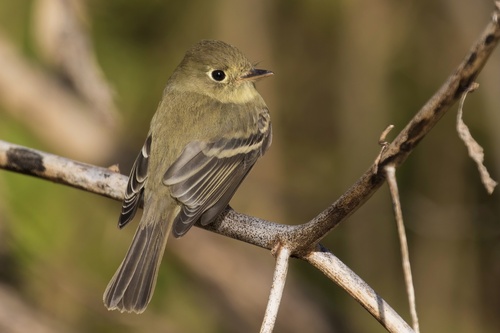
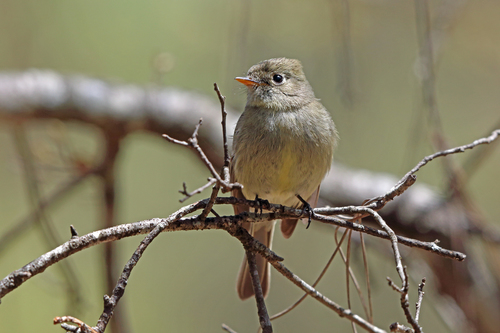
Pine Flycatcher vs Western Flycatcher
Empidonax affinis versus Empidonax difficilis
Play a quiz with Pine Flycatcher and Western Flycatcher
Pine Flycatcher
Western Flycatcher
In short
The Pine Flycatcher and Western Flycatcher are both small Empidonax flycatchers, making them challenging to differentiate in the field. Key differences lie in their vocalizations and subtle structural features. Observers should focus on habitat preferences and vocalizations for more reliable identification.
Identification tips
- Habitat: Note the type of forest; Pine Flycatchers prefer pine forests while Western Flycatchers are often near water. 2. Vocalizations: Listen carefully for song differences, but be cautious of overlap. 3. Location: Consider geographic range and elevation, as Pine Flycatchers are more restricted to specific montane regions. 4. Plumage: Look for subtle differences in brightness, with Pine Flycatchers appearing duller.
Size
Both species are similar in size, typical of small flycatchers.
Plumage
Plumage is generally similar, with both species showing olive-green upperparts and pale underparts. However, the Pine Flycatcher may appear slightly duller overall.
Behaviour
Both species exhibit typical flycatcher behavior, such as sallying from perches to catch insects.
Habitat
Pine Flycatchers are typically found in montane pine forests, while Western Flycatchers prefer moist, forested habitats, often near streams or in riparian zones.
Voice
Vocalizations are crucial for differentiation. The Western Flycatcher has a more complex and variable song compared to the simpler, less varied song of the Pine Flycatcher. However, vocalizations can be variable and overlap, making them unreliable without experience.