Birdr

Pine Grosbeak vs Trumpeter Finch

Pinicola enucleator versus Bucanetes githagineus

Play a quiz with Pine Grosbeak and Trumpeter Finch

Pine Grosbeak (Pinicola enucleator) Pine Grosbeak
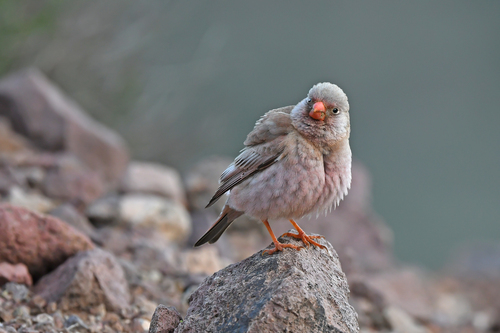
Trumpeter Finch (Bucanetes githagineus) Trumpeter Finch

Media

Loading…

In short

The Pine Grosbeak and Trumpeter Finch are both finches but differ significantly in size and habitat preferences. The Pine Grosbeak is larger and more robust, often found in boreal forests, while the Trumpeter Finch is smaller and adapted to arid environments.

Identification tips

  1. Size and structure: Pine Grosbeaks are larger and more robust. 2. Plumage: Look for the rosy-red coloration in male Pine Grosbeaks versus the sandy or pinkish tones in Trumpeter Finches. 3. Habitat: Consider the environment; Pine Grosbeaks are in forests, Trumpeter Finches in arid areas. 4. Vocalization: Listen for the fluting calls of Pine Grosbeaks compared to the nasal calls of Trumpeter Finches.

Size

The Pine Grosbeak is notably larger and more robust than the Trumpeter Finch.

Plumage

Pine Grosbeaks have a more uniform and subdued coloration, with males showing a rosy-red plumage, whereas Trumpeter Finches have a sandy or pinkish hue, with males displaying a more pronounced pinkish wash on the face and breast.

Behaviour

Pine Grosbeaks are often seen in flocks, feeding on berries and seeds in trees, while Trumpeter Finches are more likely to be found feeding on the ground in open, arid areas.

Habitat

Pine Grosbeaks inhabit boreal and subalpine forests, preferring coniferous trees, while Trumpeter Finches are adapted to arid and semi-arid regions, often near rocky outcrops or sparse vegetation.

Voice

Pine Grosbeaks have a soft, melodious call, often described as fluting, while Trumpeter Finches produce a more nasal, trumpeting call.

Submit a better description

Use the same sections as the comparison. Your text is published immediately.

The Pine Grosbeak and Trumpeter Finch are both finches but differ significantly in size and habitat preferences. The Pine Grosbeak is larger and more robust, often found in boreal forests, while the Trumpeter Finch is smaller and adapted to arid environments.

  1. Size and structure: Pine Grosbeaks are larger and more robust. 2. Plumage: Look for the rosy-red coloration in male Pine Grosbeaks versus the sandy or pinkish tones in Trumpeter Finches. 3. Habitat: Consider the environment; Pine Grosbeaks are in forests, Trumpeter Finches in arid areas. 4. Vocalization: Listen for the fluting calls of Pine Grosbeaks compared to the nasal calls of Trumpeter Finches.

The Pine Grosbeak is notably larger and more robust than the Trumpeter Finch.

Pine Grosbeaks have a more uniform and subdued coloration, with males showing a rosy-red plumage, whereas Trumpeter Finches have a sandy or pinkish hue, with males displaying a more pronounced pinkish wash on the face and breast.

Pine Grosbeaks are often seen in flocks, feeding on berries and seeds in trees, while Trumpeter Finches are more likely to be found feeding on the ground in open, arid areas.

Pine Grosbeaks inhabit boreal and subalpine forests, preferring coniferous trees, while Trumpeter Finches are adapted to arid and semi-arid regions, often near rocky outcrops or sparse vegetation.

Pine Grosbeaks have a soft, melodious call, often described as fluting, while Trumpeter Finches produce a more nasal, trumpeting call.

Discard your changes?

You have unsaved edits. If you leave now, those changes will be lost.

Pine Grosbeak · Trumpeter Finch · My Tricky Birds