Birdr

Pink-footed Shearwater vs Great Shearwater

Ardenna creatopus versus Ardenna gravis

Play a quiz with Pink-footed Shearwater and Great Shearwater
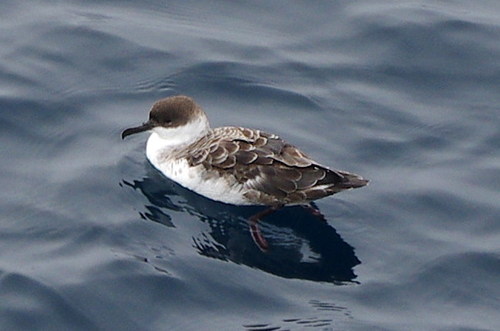
Pink-footed Shearwater (Ardenna creatopus) Pink-footed Shearwater
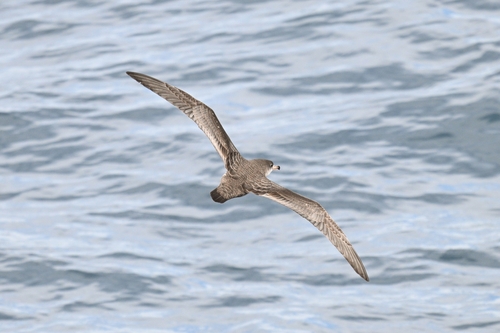
Great Shearwater (Ardenna gravis) Great Shearwater

Media

Loading…

In short

The Pink-footed Shearwater and Great Shearwater can be distinguished by their plumage and structural features. The Pink-footed Shearwater has a more uniform brownish-gray appearance with a pale face, while the Great Shearwater is notable for its distinctive dark cap and brown belly-patch. Observing these differences can help birdwatchers accurately identify these species in the field.

Identification tips

  1. Look for the dark cap and brown belly-patch on the Great Shearwater. 2. Note the pale face and more uniform plumage of the Pink-footed Shearwater. 3. Observe the underwing pattern: Great Shearwater has variable brown markings on a white underwing. 4. Consider the habitat: Pink-footed Shearwaters are more likely near continental shelves, while Great Shearwaters are often found in pelagic waters.

Size

Both species are similar in size, but the Great Shearwater may appear slightly bulkier.

Plumage

The Pink-footed Shearwater has a more uniform brownish-gray plumage with a pale face and underparts, whereas the Great Shearwater features a dark cap, a white underwing with variable brown markings, and a distinctive brown belly-patch.

Behaviour

Both species exhibit similar foraging behaviors, often associating with other seabirds and marine predators.

Habitat

The Pink-footed Shearwater primarily forages over continental shelves and slopes, while the Great Shearwater is more pelagic, often found in the open ocean during non-breeding season.

Submit a better description

Use the same sections as the comparison. Your text is published immediately.

The Pink-footed Shearwater and Great Shearwater can be distinguished by their plumage and structural features. The Pink-footed Shearwater has a more uniform brownish-gray appearance with a pale face, while the Great Shearwater is notable for its distinctive dark cap and brown belly-patch. Observing these differences can help birdwatchers accurately identify these species in the field.

  1. Look for the dark cap and brown belly-patch on the Great Shearwater. 2. Note the pale face and more uniform plumage of the Pink-footed Shearwater. 3. Observe the underwing pattern: Great Shearwater has variable brown markings on a white underwing. 4. Consider the habitat: Pink-footed Shearwaters are more likely near continental shelves, while Great Shearwaters are often found in pelagic waters.

Both species are similar in size, but the Great Shearwater may appear slightly bulkier.

The Pink-footed Shearwater has a more uniform brownish-gray plumage with a pale face and underparts, whereas the Great Shearwater features a dark cap, a white underwing with variable brown markings, and a distinctive brown belly-patch.

Both species exhibit similar foraging behaviors, often associating with other seabirds and marine predators.

The Pink-footed Shearwater primarily forages over continental shelves and slopes, while the Great Shearwater is more pelagic, often found in the open ocean during non-breeding season.

Discard your changes?

You have unsaved edits. If you leave now, those changes will be lost.

Pink-footed Shearwater · Great Shearwater · My Tricky Birds