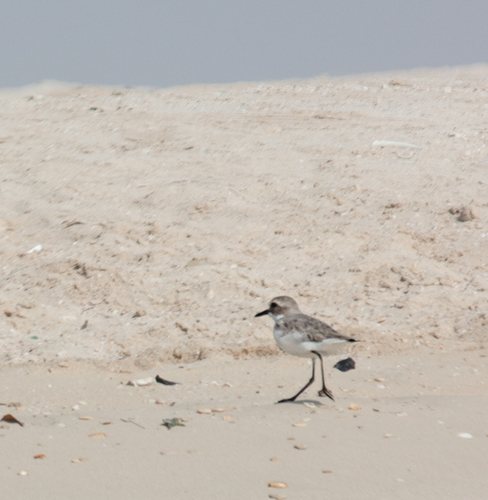
Piping Plover vs Greater Sand Plover
Charadrius melodus versus Anarhynchus leschenaultii
Play a quiz with Piping Plover and Greater Sand Plover
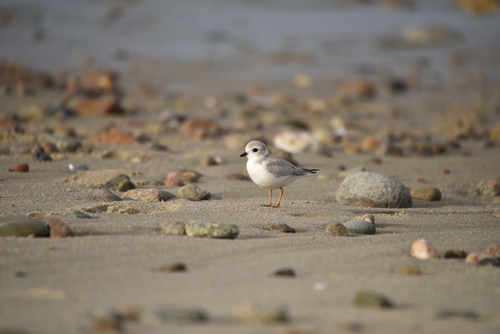
Piping Plover
Greater Sand Plover
In short
The Piping Plover and Greater Sand Plover are both small shorebirds, but they can be distinguished by their size, bill shape, and habitat preferences. Piping Plovers are smaller with a shorter, stubbier bill, while Greater Sand Plovers are larger with a longer, more pointed bill. Habitat is a key differentiator, as Piping Plovers are found in North America, whereas Greater Sand Plovers are native to Eurasia.
Identification tips
1. Bill Shape: Piping Plovers have a shorter, stubbier bill compared to the longer, more pointed bill of Greater Sand Plovers. 2. Size: Observe the overall size; Piping Plovers are noticeably smaller. 3. Habitat: Check the location; Piping Plovers are in North America, Greater Sand Plovers in Eurasia. 4. Plumage: Look for the black forehead and neckband in Piping Plovers during breeding season. 5. Call: Listen for the clear 'peep-lo' of the Piping Plover.
Size
Piping Plovers are smaller and more compact compared to the larger Greater Sand Plovers.
Plumage
Piping Plovers have a pale sandy-gray upperpart with a distinctive black band across the forehead and a partial or complete black neckband during breeding. Greater Sand Plovers have a more uniform sandy-brown upperpart and a less distinct facial pattern.
Behaviour
Both species forage by running and stopping, but Piping Plovers are more likely to be seen on open sandy beaches, while Greater Sand Plovers can be found in a wider range of coastal habitats.
Habitat
Piping Plovers inhabit North American beaches and sandflats, while Greater Sand Plovers are found in coastal regions of Eurasia, often in more varied habitats including mudflats and tidal areas.
Voice
Piping Plovers have a distinctive, clear, whistled 'peep-lo' call, while Greater Sand Plovers have a more varied repertoire, including harsh and trilled calls.