Birdr

Plain-winged Woodcreeper vs Planalto Woodcreeper

Dendrocincla turdina versus Dendrocolaptes platyrostris

Play a quiz with Plain-winged Woodcreeper and Planalto Woodcreeper
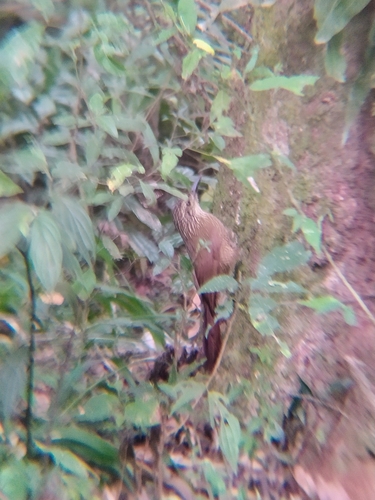
Plain-winged Woodcreeper (Dendrocincla turdina) Plain-winged Woodcreeper
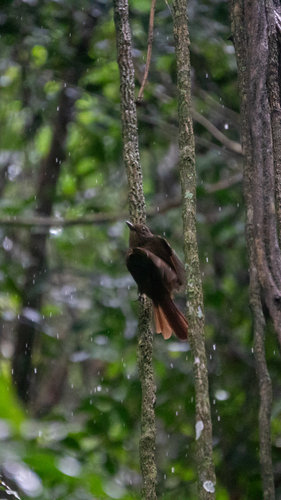
Planalto Woodcreeper (Dendrocolaptes platyrostris) Planalto Woodcreeper

Media

Loading…

In short

The Plain-winged Woodcreeper and the Planalto Woodcreeper are both members of the woodcreeper family, but they can be distinguished by their bill structure and plumage details. The Planalto Woodcreeper has a noticeably thicker and longer bill compared to the more slender bill of the Plain-winged Woodcreeper. Additionally, the Planalto Woodcreeper often shows a more barred pattern on its underparts.

Identification tips

  1. Bill Structure: Look for the thicker, longer bill of the Planalto Woodcreeper. 2. Plumage Patterns: Check for barred underparts in the Planalto Woodcreeper versus the more uniform brown of the Plain-winged Woodcreeper. 3. Crown and Supercilium: Note the streaked crown and lack of supercilium in the Plain-winged Woodcreeper. 4. Behavior: Observe any ant-following behavior, which might suggest Planalto Woodcreeper.

Size

Both species are similar in size, though the Planalto Woodcreeper may appear bulkier due to its larger bill.

Plumage

The Plain-winged Woodcreeper has a more uniformly brown plumage with a streaked crown and lacks a supercilium. In contrast, the Planalto Woodcreeper often displays a barred pattern on its underparts and may have a more pronounced supercilium.

Behaviour

The Planalto Woodcreeper is sometimes seen following ant swarms, although this behavior is not as specialized as once thought. The Plain-winged Woodcreeper tends to forage more independently.

Habitat

Both species inhabit tropical forests, but the Plain-winged Woodcreeper is more restricted to the Atlantic Forest regions of Brazil. The Planalto Woodcreeper has a broader range within South America.

Voice

Vocalizations are not well-documented in the provided notes, but woodcreepers typically have distinctive calls that can aid identification.

Submit a better description

Use the same sections as the comparison. Your text is published immediately.

The Plain-winged Woodcreeper and the Planalto Woodcreeper are both members of the woodcreeper family, but they can be distinguished by their bill structure and plumage details. The Planalto Woodcreeper has a noticeably thicker and longer bill compared to the more slender bill of the Plain-winged Woodcreeper. Additionally, the Planalto Woodcreeper often shows a more barred pattern on its underparts.

  1. Bill Structure: Look for the thicker, longer bill of the Planalto Woodcreeper. 2. Plumage Patterns: Check for barred underparts in the Planalto Woodcreeper versus the more uniform brown of the Plain-winged Woodcreeper. 3. Crown and Supercilium: Note the streaked crown and lack of supercilium in the Plain-winged Woodcreeper. 4. Behavior: Observe any ant-following behavior, which might suggest Planalto Woodcreeper.

Both species are similar in size, though the Planalto Woodcreeper may appear bulkier due to its larger bill.

The Plain-winged Woodcreeper has a more uniformly brown plumage with a streaked crown and lacks a supercilium. In contrast, the Planalto Woodcreeper often displays a barred pattern on its underparts and may have a more pronounced supercilium.

The Planalto Woodcreeper is sometimes seen following ant swarms, although this behavior is not as specialized as once thought. The Plain-winged Woodcreeper tends to forage more independently.

Both species inhabit tropical forests, but the Plain-winged Woodcreeper is more restricted to the Atlantic Forest regions of Brazil. The Planalto Woodcreeper has a broader range within South America.

Vocalizations are not well-documented in the provided notes, but woodcreepers typically have distinctive calls that can aid identification.

Discard your changes?

You have unsaved edits. If you leave now, those changes will be lost.

Plain-winged Woodcreeper · Planalto Woodcreeper · My Tricky Birds