Birdr

Plumed Whistling-Duck vs Mangrove Cuckoo

Dendrocygna eytoni versus Coccyzus minor

Play a quiz with Plumed Whistling-Duck and Mangrove Cuckoo
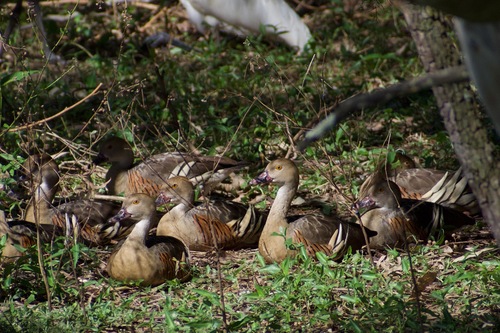
Plumed Whistling-Duck (Dendrocygna eytoni) Plumed Whistling-Duck
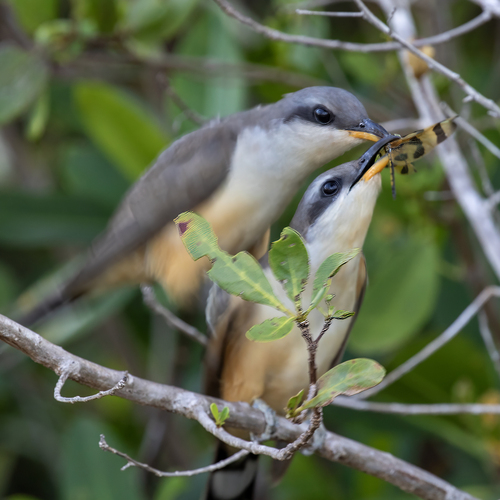
Mangrove Cuckoo (Coccyzus minor) Mangrove Cuckoo

Media

Loading…

In short

The Plumed Whistling-Duck and the Mangrove Cuckoo are distinct species with little overlap in appearance or habitat. The Plumed Whistling-Duck is a waterfowl with characteristic plumes on its flanks, while the Mangrove Cuckoo is a slender, long-tailed bird with a distinctive black mask and white-tipped tail feathers.

Identification tips

  1. Location: Check the habitat; Plumed Whistling-Ducks are near freshwater, Mangrove Cuckoos in mangroves. 2. Body Shape: Look for the duck's bulkier body versus the cuckoo's slender form. 3. Plumage Details: Note the duck's flank plumes and the cuckoo's black mask and white-tipped tail.

Size

The Plumed Whistling-Duck is larger and bulkier, typical of waterfowl, whereas the Mangrove Cuckoo is smaller and more slender.

Plumage

The Plumed Whistling-Duck has a brown body with striking plumes on its flanks. In contrast, the Mangrove Cuckoo has a plain grayish-brown head and upperparts, a black auricular mask, and white-tipped tail feathers.

Behaviour

The Plumed Whistling-Duck is often seen in flocks near water bodies, while the Mangrove Cuckoo is more solitary and typically found in mangrove forests.

Habitat

Plumed Whistling-Ducks are found near freshwater wetlands, whereas Mangrove Cuckoos inhabit mangrove forests and coastal areas.

Submit a better description

Use the same sections as the comparison. Your text is published immediately.

The Plumed Whistling-Duck and the Mangrove Cuckoo are distinct species with little overlap in appearance or habitat. The Plumed Whistling-Duck is a waterfowl with characteristic plumes on its flanks, while the Mangrove Cuckoo is a slender, long-tailed bird with a distinctive black mask and white-tipped tail feathers.

  1. Location: Check the habitat; Plumed Whistling-Ducks are near freshwater, Mangrove Cuckoos in mangroves. 2. Body Shape: Look for the duck's bulkier body versus the cuckoo's slender form. 3. Plumage Details: Note the duck's flank plumes and the cuckoo's black mask and white-tipped tail.

The Plumed Whistling-Duck is larger and bulkier, typical of waterfowl, whereas the Mangrove Cuckoo is smaller and more slender.

The Plumed Whistling-Duck has a brown body with striking plumes on its flanks. In contrast, the Mangrove Cuckoo has a plain grayish-brown head and upperparts, a black auricular mask, and white-tipped tail feathers.

The Plumed Whistling-Duck is often seen in flocks near water bodies, while the Mangrove Cuckoo is more solitary and typically found in mangrove forests.

Plumed Whistling-Ducks are found near freshwater wetlands, whereas Mangrove Cuckoos inhabit mangrove forests and coastal areas.

Discard your changes?

You have unsaved edits. If you leave now, those changes will be lost.

Plumed Whistling-Duck · Mangrove Cuckoo · My Tricky Birds