Plumed Whistling-Duck vs Southern Lapwing
Dendrocygna eytoni versus Vanellus chilensis
Play a quiz with Plumed Whistling-Duck and Southern Lapwing
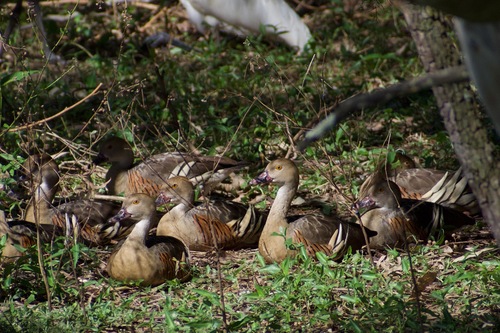
Plumed Whistling-Duck
Southern Lapwing
In short
The Plumed Whistling-Duck and Southern Lapwing are unlikely to be confused due to their distinct appearances and behaviors. The Plumed Whistling-Duck is a waterfowl with a distinctive long neck and ornate plumage, while the Southern Lapwing is a shorebird with striking facial markings and a more terrestrial lifestyle.
Identification tips
1. Location and habitat: Check if the bird is near water (Plumed Whistling-Duck) or in open fields (Southern Lapwing). 2. Plumage details: Look for flank plumes and buffy color in Plumed Whistling-Duck; check for black and white facial markings in Southern Lapwing. 3. Behavior: Observe if the bird is in a flock near water or displaying territorial behavior in open areas. 4. Call: Listen for the whistling of the duck versus the loud calls of the lapwing.
Size
The Plumed Whistling-Duck is generally larger and bulkier than the Southern Lapwing, with a longer neck and body.
Plumage
The Plumed Whistling-Duck has a buffy body with long, elegant plumes on its flanks and a pinkish bill. In contrast, the Southern Lapwing features a grayish body with a black chest band, a white face, and a prominent black crown and facial markings.
Behaviour
Plumed Whistling-Ducks are often seen in flocks near water, feeding on grasses. Southern Lapwings are more solitary or in pairs, often seen on open ground or grasslands, and are known for their aggressive territorial behavior.
Habitat
Plumed Whistling-Ducks are typically found near freshwater bodies such as lakes and wetlands. Southern Lapwings prefer open fields, grasslands, and sometimes urban areas.
Voice
Plumed Whistling-Ducks produce a distinctive whistling sound, while Southern Lapwings have a loud, harsh call often heard during territorial displays.