Prothonotary Warbler vs Swainson's Warbler
Protonotaria citrea versus Limnothlypis swainsonii
Play a quiz with Prothonotary Warbler and Swainson's Warbler
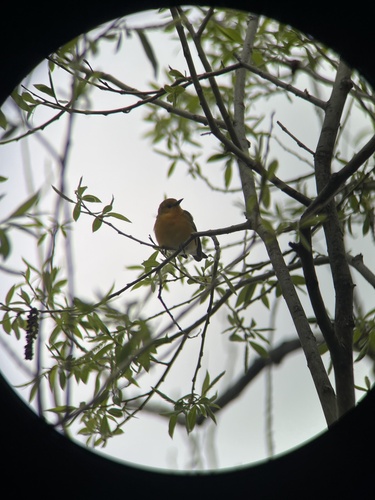
Prothonotary Warbler
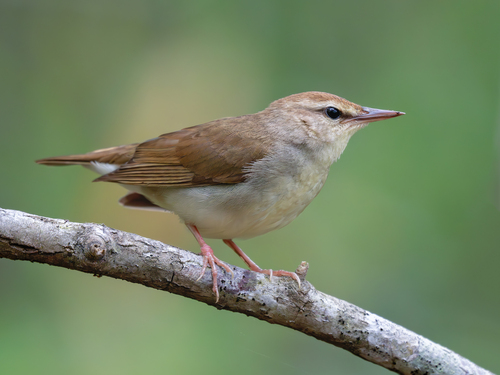
Swainson's Warbler
In short
The Prothonotary Warbler is unmistakable with its bright yellow body and blue-gray wings, while the Swainson's Warbler is more subdued with brown upperparts and a pale underbelly. Both species inhabit wooded wetlands, but the Prothonotary Warbler is more visually striking and easier to identify by color.
Identification tips
- Look for the bright yellow plumage of the Prothonotary Warbler, especially in good light.
- Note the brown, nondescript appearance of the Swainson's Warbler, which blends into its dense, wooded habitat.
- Listen for the Prothonotary Warbler's loud, ringing song versus the Swainson's Warbler's melodious, complex song.
- Consider habitat: Prothonotary Warblers are more likely in open, wet forests, while Swainson's Warblers prefer dense, swampy areas.
Size
Both species are similar in size, typical of small warblers, but the Prothonotary Warbler may appear slightly bulkier due to its bright plumage.
Plumage
The Prothonotary Warbler has a vivid yellow body with blue-gray wings and tail, and lacks any streaking. In contrast, the Swainson's Warbler is uniformly brown above with a pale underbelly and a subtle supercilium, giving it a more muted appearance.
Behaviour
Prothonotary Warblers are often seen actively foraging in tree cavities or along water edges, while Swainson's Warblers are more secretive, often skulking in dense undergrowth.
Habitat
Both species prefer wet, forested habitats. The Prothonotary Warbler is typically found in bottomland hardwood forests and mangroves, whereas the Swainson's Warbler is more often in dense, swampy undergrowth or early-seral pine plantations.
Voice
The Prothonotary Warbler's song is a loud, ringing series of notes, while the Swainson's Warbler has a more complex, melodious song. Both species' calls can be difficult to distinguish without experience.