
Birdr

Purple Sandpiper vs Little Stint

Calidris maritima versus Calidris minuta

Play a quiz with Purple Sandpiper and Little Stint
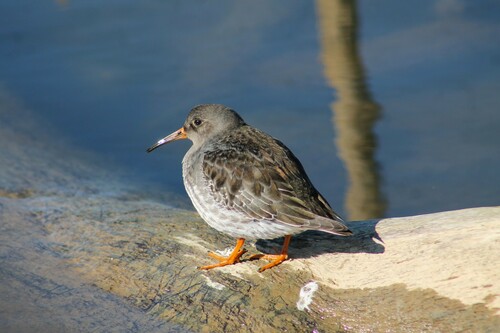
Purple Sandpiper (Calidris maritima) Purple Sandpiper
Little Stint (Calidris minuta) Little Stint

Media

Loading…

In short

Purple Sandpipers and Little Stints can be distinguished by size and habitat preference. The Purple Sandpiper is larger and often found on rocky coastlines, while the Little Stint is smaller and prefers mudflats or sandy shores. Observing their behavior and plumage can also aid in identification.

Identification tips

  1. Size: Purple Sandpipers are larger than Little Stints. 2. Habitat: Look for Purple Sandpipers on rocky coastlines and Little Stints on mudflats. 3. Plumage: Note the purple sheen on Purple Sandpipers in winter and the more rufous tones of Little Stints in breeding plumage. 4. Behavior: Observe the flight pattern; Purple Sandpipers fly low over water, while Little Stints are more active on mudflats.

Size

The Purple Sandpiper is noticeably larger than the Little Stint.

Plumage

In non-breeding plumage, Purple Sandpipers have slate to charcoal upperparts with a faint purple sheen, while Little Stints are paler with more uniform brownish-grey tones. During breeding, Purple Sandpipers show chestnut and buff highlights, whereas Little Stints display a more rufous and patterned appearance.

Behaviour

Purple Sandpipers are often seen on rocky coastlines and tend to fly low over water when flushed. Little Stints are more active on mudflats, often seen feeding in small flocks.

Habitat

Purple Sandpipers prefer rocky coastlines and are often found in the high Arctic to subarctic regions. Little Stints are typically found on mudflats or sandy shores, often in more temperate regions.

Voice

Vocalizations are not a primary distinguishing feature between these two species in the field.

Submit a better description

Use the same sections as the comparison. Your text is published immediately.

Purple Sandpipers and Little Stints can be distinguished by size and habitat preference. The Purple Sandpiper is larger and often found on rocky coastlines, while the Little Stint is smaller and prefers mudflats or sandy shores. Observing their behavior and plumage can also aid in identification.

  1. Size: Purple Sandpipers are larger than Little Stints. 2. Habitat: Look for Purple Sandpipers on rocky coastlines and Little Stints on mudflats. 3. Plumage: Note the purple sheen on Purple Sandpipers in winter and the more rufous tones of Little Stints in breeding plumage. 4. Behavior: Observe the flight pattern; Purple Sandpipers fly low over water, while Little Stints are more active on mudflats.

The Purple Sandpiper is noticeably larger than the Little Stint.

In non-breeding plumage, Purple Sandpipers have slate to charcoal upperparts with a faint purple sheen, while Little Stints are paler with more uniform brownish-grey tones. During breeding, Purple Sandpipers show chestnut and buff highlights, whereas Little Stints display a more rufous and patterned appearance.

Purple Sandpipers are often seen on rocky coastlines and tend to fly low over water when flushed. Little Stints are more active on mudflats, often seen feeding in small flocks.

Purple Sandpipers prefer rocky coastlines and are often found in the high Arctic to subarctic regions. Little Stints are typically found on mudflats or sandy shores, often in more temperate regions.

Vocalizations are not a primary distinguishing feature between these two species in the field.

Discard your changes?

You have unsaved edits. If you leave now, those changes will be lost.

Purple Sandpiper · Little Stint · My Tricky Birds