Birdr

Purple-throated Fruitcrow vs Lovely Cotinga

Querula purpurata versus Cotinga amabilis

Play a quiz with Purple-throated Fruitcrow and Lovely Cotinga
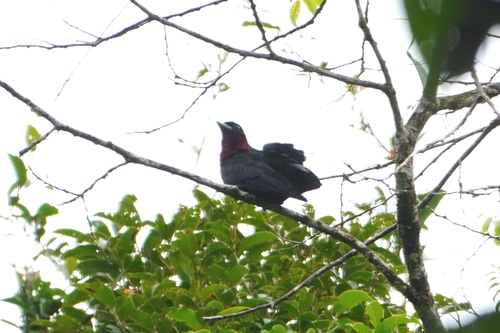
Purple-throated Fruitcrow (Querula purpurata) Purple-throated Fruitcrow
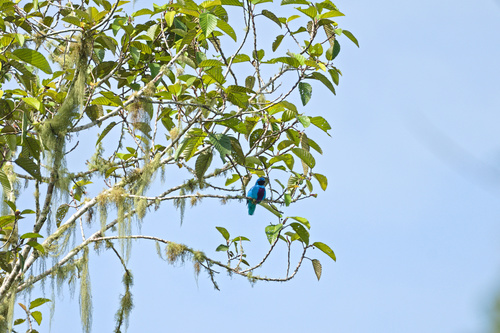
Lovely Cotinga (Cotinga amabilis) Lovely Cotinga

Media

Loading…

In short

The Purple-throated Fruitcrow and Lovely Cotinga are both striking members of the cotinga family, but they can be distinguished by their plumage and social behavior. The Purple-throated Fruitcrow has a deep purple throat and is often seen in social groups, while the Lovely Cotinga is known for its vibrant blue coloration and solitary nature.

Identification tips

Look for social behavior: Purple-throated Fruitcrows are often in groups, while Lovely Cotingas are solitary. Check throat color: deep purple in Purple-throated Fruitcrow versus overall blue in Lovely Cotinga. Listen for wing sounds: Lovely Cotinga males produce a rattle during flight.

Size

Both species are similar in size, resembling small crows.

Plumage

The Purple-throated Fruitcrow features a deep purple throat on a mostly black body, while the Lovely Cotinga is recognized for its vibrant blue plumage.

Behaviour

Purple-throated Fruitcrows are social and often found in groups, whereas Lovely Cotingas are more solitary.

Habitat

Purple-throated Fruitcrows inhabit humid lowland forests from southern Nicaragua to Bolivia, while Lovely Cotingas are found in similar forested habitats but are more localized in Central America.

Voice

The Lovely Cotinga produces a slight rattle with its wings during flight, especially in the breeding season; Purple-throated Fruitcrow vocalizations are not noted for distinctive sounds.

Submit a better description

Use the same sections as the comparison. Your text is published immediately.

The Purple-throated Fruitcrow and Lovely Cotinga are both striking members of the cotinga family, but they can be distinguished by their plumage and social behavior. The Purple-throated Fruitcrow has a deep purple throat and is often seen in social groups, while the Lovely Cotinga is known for its vibrant blue coloration and solitary nature.

Look for social behavior: Purple-throated Fruitcrows are often in groups, while Lovely Cotingas are solitary. Check throat color: deep purple in Purple-throated Fruitcrow versus overall blue in Lovely Cotinga. Listen for wing sounds: Lovely Cotinga males produce a rattle during flight.

Both species are similar in size, resembling small crows.

The Purple-throated Fruitcrow features a deep purple throat on a mostly black body, while the Lovely Cotinga is recognized for its vibrant blue plumage.

Purple-throated Fruitcrows are social and often found in groups, whereas Lovely Cotingas are more solitary.

Purple-throated Fruitcrows inhabit humid lowland forests from southern Nicaragua to Bolivia, while Lovely Cotingas are found in similar forested habitats but are more localized in Central America.

The Lovely Cotinga produces a slight rattle with its wings during flight, especially in the breeding season; Purple-throated Fruitcrow vocalizations are not noted for distinctive sounds.

Discard your changes?

You have unsaved edits. If you leave now, those changes will be lost.

Purple-throated Fruitcrow · Lovely Cotinga · My Tricky Birds