Birdr

Pygmy Cormorant vs Great Cormorant

Microcarbo pygmaeus versus Phalacrocorax carbo

Play a quiz with Pygmy Cormorant and Great Cormorant

Pygmy Cormorant (Microcarbo pygmaeus) Pygmy Cormorant
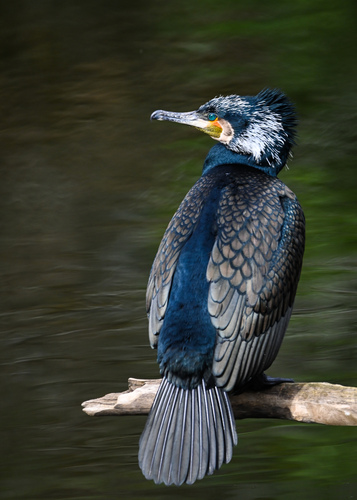
Great Cormorant (Phalacrocorax carbo) Great Cormorant

Media

Loading…

In short

The Pygmy Cormorant is notably smaller and more compact than the Great Cormorant, with distinct plumage differences. While both species share similar habitats, the Pygmy Cormorant is more often found in freshwater environments.

Identification tips

1. Size: Look for the smaller, more compact Pygmy Cormorant compared to the larger Great Cormorant. 2. Plumage: Note the brownish tones and white chin of the Pygmy Cormorant versus the glossy black and white facial patch of the Great Cormorant. 3. Habitat: Consider the likelihood of Pygmy Cormorants in freshwater settings. 4. Behavior: Observe diving depth and flock size; Great Cormorants dive deeper and may be in larger groups.

Size

The Pygmy Cormorant is significantly smaller than the Great Cormorant, making size a reliable field mark when both species are seen together.

Plumage

The Pygmy Cormorant has a more brownish plumage with a distinctive white chin and throat, whereas the Great Cormorant displays a glossy black plumage with a white patch on the face during breeding season.

Behaviour

Both species dive for fish, but the Great Cormorant is known to dive deeper and often feeds in larger flocks.

Habitat

The Pygmy Cormorant is more commonly found in freshwater lakes and rivers, while the Great Cormorant can be found in both freshwater and marine environments.

Voice

Vocalizations are not a reliable distinguishing feature in the field for these species.

Submit a better description

Use the same sections as the comparison. Your text is published immediately.

The Pygmy Cormorant is notably smaller and more compact than the Great Cormorant, with distinct plumage differences. While both species share similar habitats, the Pygmy Cormorant is more often found in freshwater environments.

1. Size: Look for the smaller, more compact Pygmy Cormorant compared to the larger Great Cormorant. 2. Plumage: Note the brownish tones and white chin of the Pygmy Cormorant versus the glossy black and white facial patch of the Great Cormorant. 3. Habitat: Consider the likelihood of Pygmy Cormorants in freshwater settings. 4. Behavior: Observe diving depth and flock size; Great Cormorants dive deeper and may be in larger groups.

The Pygmy Cormorant is significantly smaller than the Great Cormorant, making size a reliable field mark when both species are seen together.

The Pygmy Cormorant has a more brownish plumage with a distinctive white chin and throat, whereas the Great Cormorant displays a glossy black plumage with a white patch on the face during breeding season.

Both species dive for fish, but the Great Cormorant is known to dive deeper and often feeds in larger flocks.

The Pygmy Cormorant is more commonly found in freshwater lakes and rivers, while the Great Cormorant can be found in both freshwater and marine environments.

Vocalizations are not a reliable distinguishing feature in the field for these species.

Discard your changes?

You have unsaved edits. If you leave now, those changes will be lost.

Pygmy Cormorant · Great Cormorant · My Tricky Birds