Pyrrhuloxia vs Rose-breasted Grosbeak
Cardinalis sinuatus versus Pheucticus ludovicianus
Play a quiz with Pyrrhuloxia and Rose-breasted Grosbeak
Pyrrhuloxia
Rose-breasted Grosbeak
In short
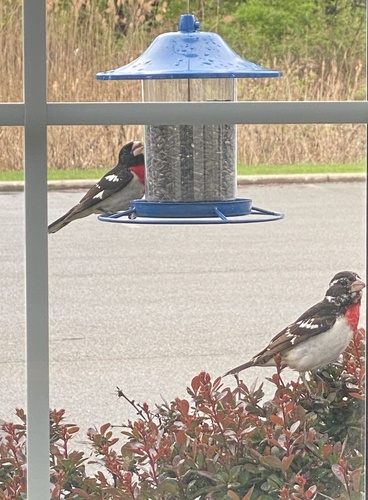
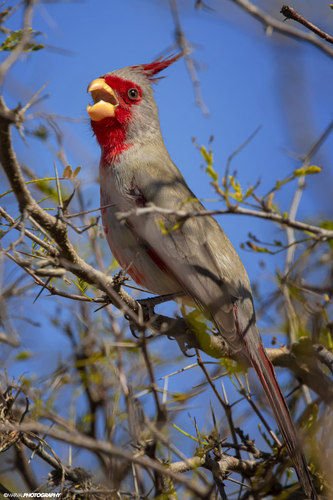
The Pyrrhuloxia and Rose-breasted Grosbeak can be distinguished by their bills and plumage. The Pyrrhuloxia has a distinctive parrot-like bill and more muted coloration, while the male Rose-breasted Grosbeak displays a striking black-and-white plumage with a rose-pink breast.
Identification tips
- Bill shape: Pyrrhuloxia has a parrot-like, curved bill; Rose-breasted Grosbeak has a thick, conical bill.
- Male plumage: Look for the rose-pink breast of the male Rose-breasted Grosbeak.
- Female plumage: Female Rose-breasted Grosbeak is brown and streaked, unlike the grayish Pyrrhuloxia.
- Habitat: Consider the habitat; desert scrub suggests Pyrrhuloxia, while forested areas suggest Rose-breasted Grosbeak.
- Song: Listen for the sweeter, more varied song of the Rose-breasted Grosbeak.
Size
Both species are similar in size, but the Rose-breasted Grosbeak may appear slightly bulkier due to its more robust build.
Plumage
The Pyrrhuloxia has a grayish body with red highlights on the crest, face, and wings. The male Rose-breasted Grosbeak is black and white with a prominent rose-pink patch on the breast, while the female is brown and streaked.
Behaviour
Pyrrhuloxia often forages in mixed-species flocks during nonbreeding seasons, while Rose-breasted Grosbeaks are known for their shared parental duties and singing while nesting.
Habitat
Pyrrhuloxia inhabits open desert scrub in the southwestern U.S. and northern Mexico, whereas the Rose-breasted Grosbeak prefers deciduous and mixed forests in eastern and central North America.
Voice
Both species have melodious songs, but the Rose-breasted Grosbeak's song is sweeter and more varied, resembling that of the American Robin.