Birdr

Red-backed Shrike vs Eurasian Jay

Lanius collurio versus Garrulus glandarius

Play a quiz with Red-backed Shrike and Eurasian Jay
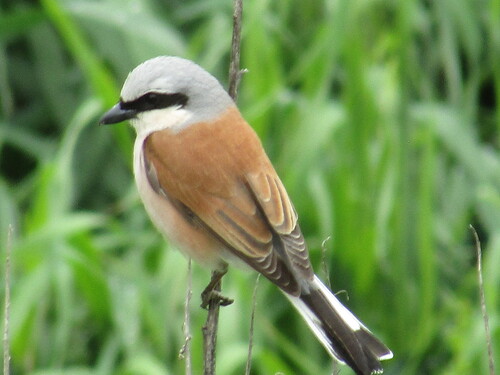
Red-backed Shrike (Lanius collurio) Red-backed Shrike
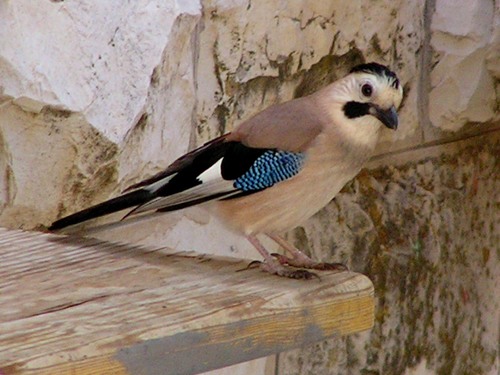
Eurasian Jay (Garrulus glandarius) Eurasian Jay

Media

Loading…

In short

The Red-backed Shrike and Eurasian Jay are easily distinguished by size and plumage. The shrike is a small, slender bird with a distinctive black mask and reddish back, while the jay is a larger, robust bird with a striking mix of pink, blue, and black feathers. Both species are found in different habitats, with the shrike preferring open areas and the jay favoring woodlands.

Identification tips

Size

The Eurasian Jay is significantly larger than the Red-backed Shrike, with a more robust build typical of corvids.

Plumage

The Red-backed Shrike has a black mask, reddish-brown back, and pale underparts. In contrast, the Eurasian Jay displays a mauve-pink body, with striking blue and black wing patches and a white rump.

Behaviour

The Red-backed Shrike often perches conspicuously on shrubs or wires, scanning for prey, while the Eurasian Jay is more secretive, often seen foraging on the ground or in trees and known for its acorn caching behavior.

Habitat

Red-backed Shrikes are typically found in open habitats like grasslands and scrub, whereas Eurasian Jays prefer woodlands but can also be seen in parks and gardens.

Voice

The Red-backed Shrike has a harsh, chattering call, while the Eurasian Jay is known for its loud, varied vocalizations, including harsh screeches and mimicking other birds.

Submit a better description

Use the same sections as the comparison. Your text is published immediately.

The Red-backed Shrike and Eurasian Jay are easily distinguished by size and plumage. The shrike is a small, slender bird with a distinctive black mask and reddish back, while the jay is a larger, robust bird with a striking mix of pink, blue, and black feathers. Both species are found in different habitats, with the shrike preferring open areas and the jay favoring woodlands.

  • Size and Shape: Note the size difference; the jay is much larger and bulkier.
  • Plumage: Look for the shrike's black mask and reddish back versus the jay's colorful plumage with blue wing patches.
  • Habitat: Consider the environment; shrikes in open areas, jays in wooded or urban areas.
  • Behavior: Observe perching habits; shrikes are more conspicuous, jays more elusive.
  • Calls: Listen for the shrike's chattering versus the jay's varied, loud calls.

The Eurasian Jay is significantly larger than the Red-backed Shrike, with a more robust build typical of corvids.

The Red-backed Shrike has a black mask, reddish-brown back, and pale underparts. In contrast, the Eurasian Jay displays a mauve-pink body, with striking blue and black wing patches and a white rump.

The Red-backed Shrike often perches conspicuously on shrubs or wires, scanning for prey, while the Eurasian Jay is more secretive, often seen foraging on the ground or in trees and known for its acorn caching behavior.

Red-backed Shrikes are typically found in open habitats like grasslands and scrub, whereas Eurasian Jays prefer woodlands but can also be seen in parks and gardens.

The Red-backed Shrike has a harsh, chattering call, while the Eurasian Jay is known for its loud, varied vocalizations, including harsh screeches and mimicking other birds.

Discard your changes?

You have unsaved edits. If you leave now, those changes will be lost.

Red-backed Shrike · Eurasian Jay · My Tricky Birds