
Red-backed Shrike vs Turkestan Shrike
Lanius collurio versus Lanius phoenicuroides
Play a quiz with Red-backed Shrike and Turkestan Shrike
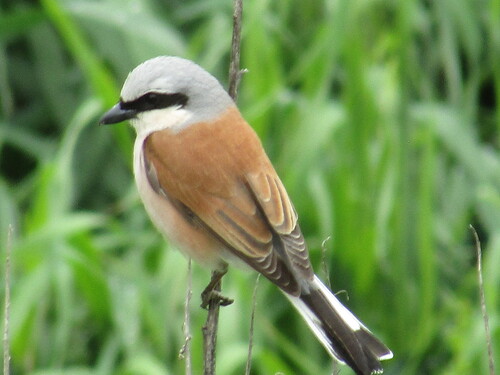 Red-backed Shrike
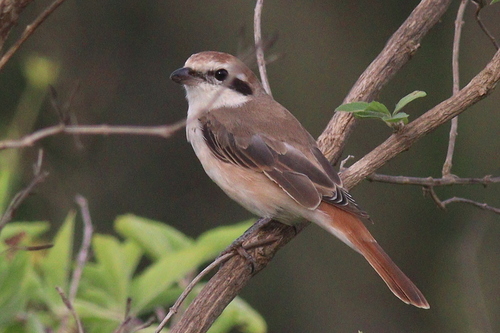 Turkestan Shrike
In short
The best way to separate Red-backed Shrike from Turkestan Shrike in the field is by focusing on plumage, especially the color and pattern of the upperparts and tail, as well as head coloration in males. Adult male Red-backed Shrike shows a distinctive grey head and rich reddish upperparts, while Turkestan Shrike males have a more uniform brownish or rufous crown and nape, lacking the clear grey cap. Females and immatures of both species are trickier, but Red-backed Shrike is more vermiculated above and below, while Turkestan Shrike tends to be plainer. Juvenile and first-winter birds are a common source of confusion, so pay close attention to the degree of vermiculation and tail color. Structure and size are very similar, so rely on plumage and head pattern for the most reliable separation.
Identification tips
- Adult male head pattern: Red-backed Shrike males have a clear blue-grey head and nape with a sharp black mask; Turkestan Shrike males show a brownish or rufous crown and nape, lacking the crisp grey cap. This is the most reliable mark in spring and summer.
- Back color in adult males: Red-backed Shrike has a rich, deep rufous back contrasting with the grey head; Turkestan Shrike's back is also rufous but blends more into the brownish crown and nape, with less contrast.
- Tail pattern: Red-backed Shrike (all ages) shows a black tail with white outer feathers, creating a strong black-and-white contrast reminiscent of a wheatear. Turkestan Shrike's tail is more uniformly rufous or red, with less white and less contrast.
- Female and juvenile upperparts: Red-backed Shrike females and juveniles are brown above with extensive, crisp vermiculation (fine barring) on the back and flanks. Turkestan Shrike females and juveniles are plainer, with less distinct or more diffuse barring.
- Underpart pattern in immatures: Immature Red-backed Shrike shows vermiculated buff underparts, while Turkestan Shrike is usually paler and less marked below.
- Mask shape and extent: Both species have a black mask through the eye, but in Red-backed Shrike it is typically broader and more sharply defined, especially in males.
- Crown color in females/immatures: Red-backed Shrike females/immatures have a colder brown crown, while Turkestan Shrike tends to have a warmer, more rufous or sandy tone.
- Flight views: In flight, Red-backed Shrike shows a black-and-white tail pattern; Turkestan Shrike's tail is more uniformly rufous, lacking strong white.
- Structural features: Both species are similar in size and shape, so structure is not a reliable separator.
- Habitat and range: In Western Europe, Red-backed Shrike is expected; Turkestan Shrike is a rare vagrant, so consider location and date, but do not rely solely on range.
- Behavior: Both species behave similarly, hunting from perches and impaling prey; behavior is not diagnostic.
- Voice: No reliable differences in vocalizations are noted in the sources.
- Seasonal context: Adult male Red-backed Shrike is easiest to identify in breeding season; females and immatures require close scrutiny of barring and tail pattern at all times of year.
- Pitfalls: Juvenile and first-winter birds are most often confused; always check for the degree of vermiculation and tail contrast, and beware of worn or faded plumage.
Size
Both species are very similar in size and structure, being medium-sized shrikes around 16–18 cm in length [wikipedia]. There is no reliable difference in overall size, bill length, or tail length that can be used in the field to distinguish Red-backed Shrike from Turkestan Shrike.
Plumage
Juvenile and first-winter birds of both species can be difficult to separate, but Red-backed Shrike (all ages except adult males) shows more extensive and crisp vermiculation (fine barring) on the upperparts and underparts, whereas Turkestan Shrike juveniles and females are generally plainer, with less marked or more diffuse barring. Adult male Red-backed Shrike is distinctive with a blue-grey head, black mask, and rich rufous back; the tail is black with white sides, similar to a wheatear. Turkestan Shrike adult males lack the clear grey cap, having a more brownish or rufous crown and nape, and the back is also rufous but often less contrasting with the head. Females and immatures of both species are brown above, but Red-backed Shrike is more heavily vermiculated, especially on the flanks and breast. The tail of Turkestan Shrike is more uniformly rufous or red, lacking the strong black-and-white contrast of Red-backed Shrike. In flight, neither species shows a strong wing panel or distinctive upperwing pattern, so focus on tail and head pattern.
Behaviour
Both species share similar shrike behavior: they hunt from prominent perches, impale prey on thorns or barbed wire, and are often seen in open country. There is no reliable behavioral difference for field separation.
Habitat
Habitat preferences overlap considerably, as both species breed in open country with scattered bushes or thorny vegetation. Red-backed Shrike breeds from Western Europe to central Russia, while Turkestan Shrike breeds further east in south Siberia and Central Asia. In Western Europe, Turkestan Shrike is a rare vagrant, so range and context can be helpful, but are not diagnostic on their own.