Birdr

Red-billed Duck vs Red-billed Tropicbird

Anas erythrorhyncha versus Phaethon aethereus

Play a quiz with Red-billed Duck and Red-billed Tropicbird

Red-billed Duck (Anas erythrorhyncha) Red-billed Duck
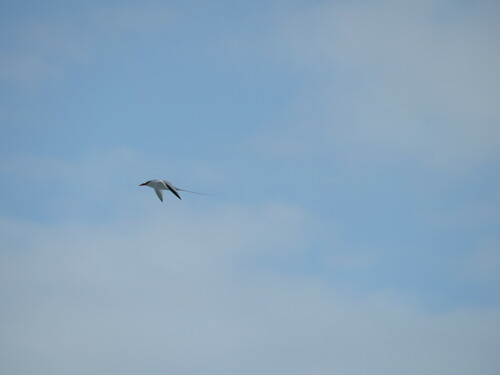
Red-billed Tropicbird (Phaethon aethereus) Red-billed Tropicbird

Media

Loading…

In short

The Red-billed Duck and the Red-billed Tropicbird are easily distinguished by their habitats and physical structures. The duck is a freshwater bird with a distinctive red bill, while the tropicbird is a seabird with long tail streamers and a striking white plumage with black markings.

Identification tips

1. Location: Look for the duck in freshwater habitats and the tropicbird over oceans or coastal areas. 2. Tail: The tropicbird has long tail streamers, absent in the duck. 3. Plumage: Note the duck's mottled brown body versus the tropicbird's predominantly white plumage. 4. Behavior: Observe the duck dabbling in water and the tropicbird's aerial acrobatics. 5. Sound: Listen for the duck's quack and the tropicbird's screech.

Size

The Red-billed Tropicbird is larger, with a wingspan reaching up to 1 meter, compared to the smaller, more compact Red-billed Duck.

Plumage

The Red-billed Duck has a mottled brown and grey body with a red bill. In contrast, the Red-billed Tropicbird is predominantly white with black markings on the wings and a long, red bill.

Behaviour

Red-billed Ducks are often seen dabbling in freshwater bodies, while Red-billed Tropicbirds are known for their graceful flight over the ocean, often seen gliding or performing aerial dives.

Habitat

Red-billed Ducks inhabit freshwater lakes and marshes in sub-Saharan Africa. Red-billed Tropicbirds are found in tropical and subtropical oceans, often near islands where they breed.

Voice

The Red-billed Duck typically makes a soft quacking sound, whereas the Red-billed Tropicbird produces a high-pitched, screeching call.

Submit a better description

Use the same sections as the comparison. Your text is published immediately.

The Red-billed Duck and the Red-billed Tropicbird are easily distinguished by their habitats and physical structures. The duck is a freshwater bird with a distinctive red bill, while the tropicbird is a seabird with long tail streamers and a striking white plumage with black markings.

1. Location: Look for the duck in freshwater habitats and the tropicbird over oceans or coastal areas. 2. Tail: The tropicbird has long tail streamers, absent in the duck. 3. Plumage: Note the duck's mottled brown body versus the tropicbird's predominantly white plumage. 4. Behavior: Observe the duck dabbling in water and the tropicbird's aerial acrobatics. 5. Sound: Listen for the duck's quack and the tropicbird's screech.

The Red-billed Tropicbird is larger, with a wingspan reaching up to 1 meter, compared to the smaller, more compact Red-billed Duck.

The Red-billed Duck has a mottled brown and grey body with a red bill. In contrast, the Red-billed Tropicbird is predominantly white with black markings on the wings and a long, red bill.

Red-billed Ducks are often seen dabbling in freshwater bodies, while Red-billed Tropicbirds are known for their graceful flight over the ocean, often seen gliding or performing aerial dives.

Red-billed Ducks inhabit freshwater lakes and marshes in sub-Saharan Africa. Red-billed Tropicbirds are found in tropical and subtropical oceans, often near islands where they breed.

The Red-billed Duck typically makes a soft quacking sound, whereas the Red-billed Tropicbird produces a high-pitched, screeching call.

Discard your changes?

You have unsaved edits. If you leave now, those changes will be lost.

Red-billed Duck · Red-billed Tropicbird · My Tricky Birds