Birdr

Red-billed Duck vs White-eared Barbet

Anas erythrorhyncha versus Stactolaema leucotis

Play a quiz with Red-billed Duck and White-eared Barbet

Red-billed Duck (Anas erythrorhyncha) Red-billed Duck
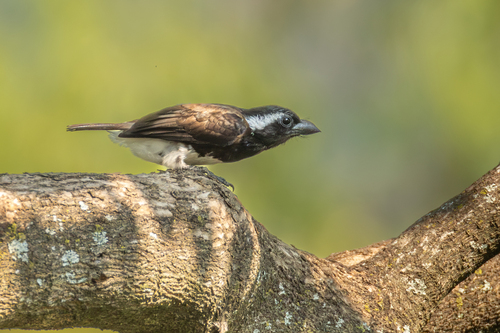
White-eared Barbet (Stactolaema leucotis) White-eared Barbet

Media

Loading…

In short

The Red-billed Duck and the White-eared Barbet are easily distinguished by their habitat and appearance. The duck is a waterfowl with a distinctive red bill, while the barbet is a tree-dwelling bird with a prominent white ear patch. Observing their environment and key plumage features will help in identification.

Identification tips

Look for the red bill and aquatic setting to identify the Red-billed Duck. For the White-eared Barbet, note the white ear patch and its presence in trees. Consider the environment: ducks in water, barbets in forests.

Size

The Red-billed Duck is significantly larger, as it is a waterfowl, compared to the smaller, stocky White-eared Barbet.

Plumage

The Red-billed Duck has a mainly brown body with a striking red bill. In contrast, the White-eared Barbet has a greenish body with a distinctive white patch on its ear and a stout bill.

Behaviour

Red-billed Ducks are often seen swimming or dabbling in water, while White-eared Barbets are typically found perching or foraging in trees.

Habitat

Red-billed Ducks are found in wetlands, lakes, and ponds. White-eared Barbets inhabit wooded areas and forests, often in the canopy.

Voice

The Red-billed Duck's vocalizations are typical of ducks, with quacks and whistles, while the White-eared Barbet produces a series of repetitive, melodious notes.

Submit a better description

Use the same sections as the comparison. Your text is published immediately.

The Red-billed Duck and the White-eared Barbet are easily distinguished by their habitat and appearance. The duck is a waterfowl with a distinctive red bill, while the barbet is a tree-dwelling bird with a prominent white ear patch. Observing their environment and key plumage features will help in identification.

Look for the red bill and aquatic setting to identify the Red-billed Duck. For the White-eared Barbet, note the white ear patch and its presence in trees. Consider the environment: ducks in water, barbets in forests.

The Red-billed Duck is significantly larger, as it is a waterfowl, compared to the smaller, stocky White-eared Barbet.

The Red-billed Duck has a mainly brown body with a striking red bill. In contrast, the White-eared Barbet has a greenish body with a distinctive white patch on its ear and a stout bill.

Red-billed Ducks are often seen swimming or dabbling in water, while White-eared Barbets are typically found perching or foraging in trees.

Red-billed Ducks are found in wetlands, lakes, and ponds. White-eared Barbets inhabit wooded areas and forests, often in the canopy.

The Red-billed Duck's vocalizations are typical of ducks, with quacks and whistles, while the White-eared Barbet produces a series of repetitive, melodious notes.

Discard your changes?

You have unsaved edits. If you leave now, those changes will be lost.

Red-billed Duck · White-eared Barbet · My Tricky Birds