Birdr

Red-billed Starling vs White-cheeked Starling

Spodiopsar sericeus versus Spodiopsar cineraceus

Play a quiz with Red-billed Starling and White-cheeked Starling
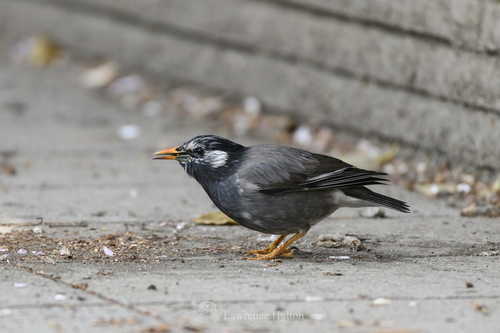
Red-billed Starling (Spodiopsar sericeus) Red-billed Starling
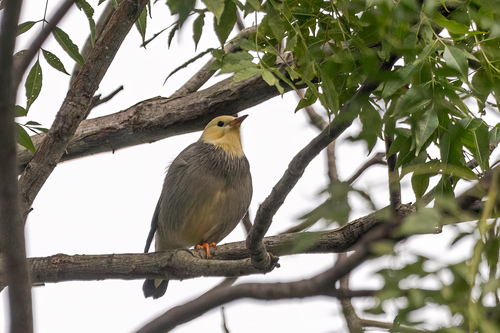
White-cheeked Starling (Spodiopsar cineraceus) White-cheeked Starling

Media

Loading…

In short

The most reliable field mark to distinguish the Red-billed Starling from the White-cheeked Starling is the bill color: Red-billed Starling has a distinctive red bill, while the White-cheeked Starling's bill is yellowish. Both species have similar body shapes and sizes, but their plumage and vocalizations offer additional clues.

Identification tips

Size

Both species are similar in size, typical of medium-sized starlings.

Plumage

Red-billed Starling has a more uniform silvery-grey plumage with a striking red bill, while the White-cheeked Starling features a white cheek patch and a yellowish bill. The Red-billed Starling's plumage appears more glossy.

Behaviour

Both species exhibit typical starling behaviors such as foraging in flocks and being highly social.

Habitat

Both species can be found in similar habitats, including open fields, urban areas, and agricultural lands, often overlapping in range.

Voice

Vocalizations are similar, with both species producing a variety of whistles and chatters, though specific differences are subtle and may require experience to discern.

Submit a better description

Use the same sections as the comparison. Your text is published immediately.

The most reliable field mark to distinguish the Red-billed Starling from the White-cheeked Starling is the bill color: Red-billed Starling has a distinctive red bill, while the White-cheeked Starling's bill is yellowish. Both species have similar body shapes and sizes, but their plumage and vocalizations offer additional clues.

  • Bill color: Red-billed Starling has a red bill; White-cheeked Starling has a yellowish bill.
  • Cheek patch: Look for the white cheek patch on the White-cheeked Starling.
  • Plumage gloss: Red-billed Starling appears more uniformly glossy.
  • Habitat overlap: Be aware of overlapping habitats; focus on bill and cheek distinctions.

Both species are similar in size, typical of medium-sized starlings.

Red-billed Starling has a more uniform silvery-grey plumage with a striking red bill, while the White-cheeked Starling features a white cheek patch and a yellowish bill. The Red-billed Starling's plumage appears more glossy.

Both species exhibit typical starling behaviors such as foraging in flocks and being highly social.

Both species can be found in similar habitats, including open fields, urban areas, and agricultural lands, often overlapping in range.

Vocalizations are similar, with both species producing a variety of whistles and chatters, though specific differences are subtle and may require experience to discern.

Discard your changes?

You have unsaved edits. If you leave now, those changes will be lost.

Red-billed Starling · White-cheeked Starling · My Tricky Birds