Birdr

Red-crested Bustard vs Crimson-breasted Gonolek

Lophotis ruficrista versus Laniarius atrococcineus

Play a quiz with Red-crested Bustard and Crimson-breasted Gonolek
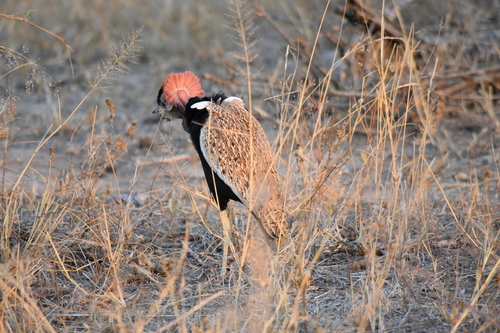
Red-crested Bustard (Lophotis ruficrista) Red-crested Bustard
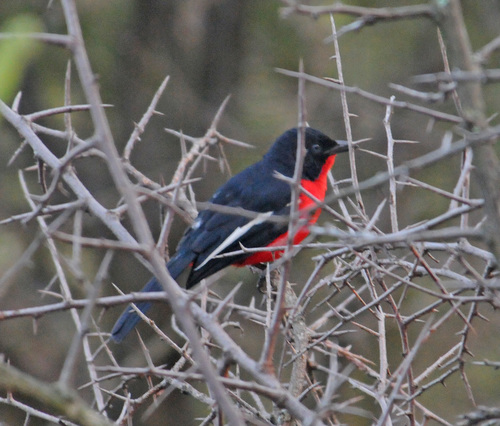
Crimson-breasted Gonolek (Laniarius atrococcineus) Crimson-breasted Gonolek

Media

Loading…

In short

The Red-crested Bustard and Crimson-breasted Gonolek are distinct in both appearance and behavior. The bustard is a terrestrial bird with a striking aerial display, while the gonolek is a vibrant, bush-dwelling passerine. Key differences include habitat preference and plumage coloration.

Identification tips

  1. Size and Shape: Look for the larger, more robust bustard versus the smaller gonolek. 2. Plumage: Note the bustard's red crest and more muted tones compared to the gonolek's striking crimson and black. 3. Behavior: Observe the bustard's aerial display if visible, and the gonolek's preference for dense cover. 4. Habitat: Consider the environment; bustards in open woodlands, gonoleks in dense thickets. 5. Vocalizations: Listen for the bustard's display calls versus the gonolek's melodious song.

Size

The Red-crested Bustard is larger and more robust compared to the smaller, more compact Crimson-breasted Gonolek.

Plumage

The Red-crested Bustard has a more subdued coloration with a notable red crest, whereas the Crimson-breasted Gonolek is vividly colored with a bright crimson breast and black upperparts.

Behaviour

Red-crested Bustards are known for their dramatic aerial displays during lekking, while Crimson-breasted Gonoleks are more secretive, often seen skulking in dense vegetation.

Habitat

Red-crested Bustards prefer open, wooded habitats like mopane and acacia areas, whereas Crimson-breasted Gonoleks are typically found in dense bush and thickets.

Voice

The Red-crested Bustard's calls are part of its lekking display, while the Crimson-breasted Gonolek is known for its rich, melodious song.

Submit a better description

Use the same sections as the comparison. Your text is published immediately.

The Red-crested Bustard and Crimson-breasted Gonolek are distinct in both appearance and behavior. The bustard is a terrestrial bird with a striking aerial display, while the gonolek is a vibrant, bush-dwelling passerine. Key differences include habitat preference and plumage coloration.

  1. Size and Shape: Look for the larger, more robust bustard versus the smaller gonolek. 2. Plumage: Note the bustard's red crest and more muted tones compared to the gonolek's striking crimson and black. 3. Behavior: Observe the bustard's aerial display if visible, and the gonolek's preference for dense cover. 4. Habitat: Consider the environment; bustards in open woodlands, gonoleks in dense thickets. 5. Vocalizations: Listen for the bustard's display calls versus the gonolek's melodious song.

The Red-crested Bustard is larger and more robust compared to the smaller, more compact Crimson-breasted Gonolek.

The Red-crested Bustard has a more subdued coloration with a notable red crest, whereas the Crimson-breasted Gonolek is vividly colored with a bright crimson breast and black upperparts.

Red-crested Bustards are known for their dramatic aerial displays during lekking, while Crimson-breasted Gonoleks are more secretive, often seen skulking in dense vegetation.

Red-crested Bustards prefer open, wooded habitats like mopane and acacia areas, whereas Crimson-breasted Gonoleks are typically found in dense bush and thickets.

The Red-crested Bustard's calls are part of its lekking display, while the Crimson-breasted Gonolek is known for its rich, melodious song.

Discard your changes?

You have unsaved edits. If you leave now, those changes will be lost.

Red-crested Bustard · Crimson-breasted Gonolek · My Tricky Birds