Birdr

Red-crested Bustard vs Zebra Waxbill

Lophotis ruficrista versus Amandava subflava

Play a quiz with Red-crested Bustard and Zebra Waxbill
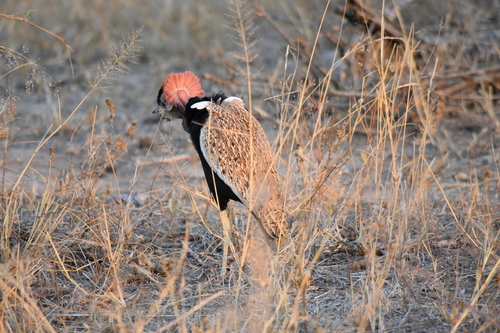
Red-crested Bustard (Lophotis ruficrista) Red-crested Bustard
Zebra Waxbill (Amandava subflava) Zebra Waxbill

Media

Loading…

In short

The Red-crested Bustard and Zebra Waxbill are easily distinguished by size and habitat. The bustard is a large ground-dwelling bird found in more wooded areas, while the waxbill is a small, colorful finch-like bird often seen in grasslands. Their behaviors and vocalizations also differ significantly.

Identification tips

  1. Size and Shape: Look for the bustard's larger size and robust build compared to the small, finch-like waxbill. 2. Habitat: Note the habitat; bustards are in wooded areas, waxbills in grasslands. 3. Plumage: Observe the bustard's red crest versus the waxbill's bright colors. 4. Behavior: Watch for the bustard's aerial display, which is absent in waxbills. 5. Vocalization: Listen for the bustard's calls during displays, contrasting with the waxbill's soft calls.

Size

The Red-crested Bustard is significantly larger than the Zebra Waxbill, with a robust body compared to the waxbill's small, delicate frame.

Plumage

The Red-crested Bustard has a more muted coloration with a distinctive red crest, whereas the Zebra Waxbill is brightly colored with a striking pattern of red and yellow.

Behaviour

Red-crested Bustards are known for their spectacular aerial displays during lekking, while Zebra Waxbills are more likely to be seen flitting through grasses or perched in small groups.

Habitat

Red-crested Bustards prefer wooded habitats like mopane and acacia areas, whereas Zebra Waxbills are typically found in open grasslands.

Voice

The Red-crested Bustard's calls are part of its lekking display, while the Zebra Waxbill has a series of soft, high-pitched calls.

Submit a better description

Use the same sections as the comparison. Your text is published immediately.

The Red-crested Bustard and Zebra Waxbill are easily distinguished by size and habitat. The bustard is a large ground-dwelling bird found in more wooded areas, while the waxbill is a small, colorful finch-like bird often seen in grasslands. Their behaviors and vocalizations also differ significantly.

  1. Size and Shape: Look for the bustard's larger size and robust build compared to the small, finch-like waxbill. 2. Habitat: Note the habitat; bustards are in wooded areas, waxbills in grasslands. 3. Plumage: Observe the bustard's red crest versus the waxbill's bright colors. 4. Behavior: Watch for the bustard's aerial display, which is absent in waxbills. 5. Vocalization: Listen for the bustard's calls during displays, contrasting with the waxbill's soft calls.

The Red-crested Bustard is significantly larger than the Zebra Waxbill, with a robust body compared to the waxbill's small, delicate frame.

The Red-crested Bustard has a more muted coloration with a distinctive red crest, whereas the Zebra Waxbill is brightly colored with a striking pattern of red and yellow.

Red-crested Bustards are known for their spectacular aerial displays during lekking, while Zebra Waxbills are more likely to be seen flitting through grasses or perched in small groups.

Red-crested Bustards prefer wooded habitats like mopane and acacia areas, whereas Zebra Waxbills are typically found in open grasslands.

The Red-crested Bustard's calls are part of its lekking display, while the Zebra Waxbill has a series of soft, high-pitched calls.

Discard your changes?

You have unsaved edits. If you leave now, those changes will be lost.

Red-crested Bustard · Zebra Waxbill · My Tricky Birds