Birdr

Red-crested Pochard vs Canvasback

Netta rufina versus Aythya valisineria

Play a quiz with Red-crested Pochard and Canvasback
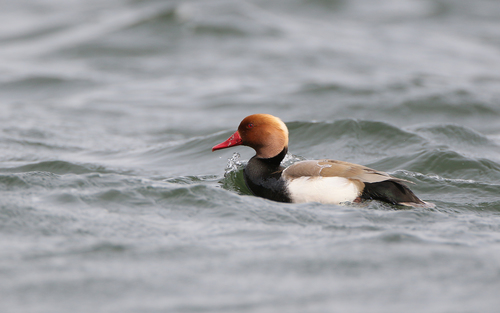
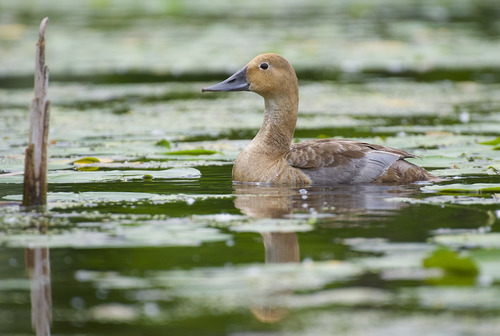
Red-crested Pochard (Netta rufina) Red-crested Pochard
Canvasback (Aythya valisineria) Canvasback

Media

Loading…

In short

The Red-crested Pochard and Canvasback are both diving ducks but can be distinguished by their head and bill shapes. The Red-crested Pochard has a distinctive rounded, orange-red head and a bright red bill, while the Canvasback features a sloping forehead and a long, black bill. Both species are found in similar aquatic habitats but differ in plumage and behavior.

Identification tips

  1. Look for the head shape and color: Red-crested Pochard has a rounded orange-red head, while Canvasback has a sloping chestnut-red head. 2. Bill shape and color: Red-crested Pochard has a bright red bill, Canvasback has a long black bill. 3. Plumage patterns: Note the contrasting white flanks of the Red-crested Pochard compared to the more uniform body of the Canvasback. 4. Habitat preference: Red-crested Pochard in vegetated areas, Canvasback in open waters.

Size

Both species are similar in size, but the Canvasback is slightly larger and more elongated.

Plumage

The male Red-crested Pochard has a striking orange-red head and a black breast, with a white flanks and back. In contrast, the male Canvasback has a chestnut-red head, a black breast, and a white body with a grayish back. Females of both species are more subdued, but the Canvasback female has a more uniform brownish-gray appearance.

Behaviour

Both species dive for food, but the Red-crested Pochard is more likely to be seen dabbling on the surface. Canvasbacks are more specialized in diving and are often seen in deeper waters.

Habitat

Both species inhabit lakes and ponds, but the Red-crested Pochard prefers areas with rich submerged vegetation, while the Canvasback is often found in larger, open water bodies.

Voice

Vocalizations are not a primary distinguishing feature between these species in the field.

Submit a better description

Use the same sections as the comparison. Your text is published immediately.

The Red-crested Pochard and Canvasback are both diving ducks but can be distinguished by their head and bill shapes. The Red-crested Pochard has a distinctive rounded, orange-red head and a bright red bill, while the Canvasback features a sloping forehead and a long, black bill. Both species are found in similar aquatic habitats but differ in plumage and behavior.

  1. Look for the head shape and color: Red-crested Pochard has a rounded orange-red head, while Canvasback has a sloping chestnut-red head. 2. Bill shape and color: Red-crested Pochard has a bright red bill, Canvasback has a long black bill. 3. Plumage patterns: Note the contrasting white flanks of the Red-crested Pochard compared to the more uniform body of the Canvasback. 4. Habitat preference: Red-crested Pochard in vegetated areas, Canvasback in open waters.

Both species are similar in size, but the Canvasback is slightly larger and more elongated.

The male Red-crested Pochard has a striking orange-red head and a black breast, with a white flanks and back. In contrast, the male Canvasback has a chestnut-red head, a black breast, and a white body with a grayish back. Females of both species are more subdued, but the Canvasback female has a more uniform brownish-gray appearance.

Both species dive for food, but the Red-crested Pochard is more likely to be seen dabbling on the surface. Canvasbacks are more specialized in diving and are often seen in deeper waters.

Both species inhabit lakes and ponds, but the Red-crested Pochard prefers areas with rich submerged vegetation, while the Canvasback is often found in larger, open water bodies.

Vocalizations are not a primary distinguishing feature between these species in the field.

Discard your changes?

You have unsaved edits. If you leave now, those changes will be lost.

Red-crested Pochard · Canvasback · My Tricky Birds