Birdr

Red-eyed Vireo vs Turkestan Shrike

Vireo olivaceus versus Lanius phoenicuroides

Play a quiz with Red-eyed Vireo and Turkestan Shrike
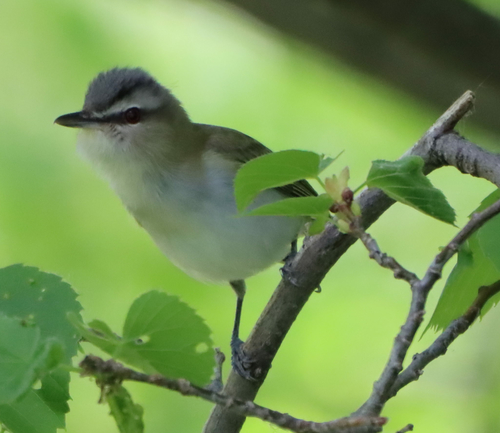
Red-eyed Vireo (Vireo olivaceus) Red-eyed Vireo
Turkestan Shrike (Lanius phoenicuroides) Turkestan Shrike

Media

Loading…

In short

The Red-eyed Vireo and Turkestan Shrike are not closely related, making them distinguishable by structure and behavior. The vireo is a small, active songbird with a distinctive red eye, while the shrike is a larger, predatory bird with a hooked bill. Both species have different habitats and vocalizations, aiding in identification.

Identification tips

  1. Eye color: Look for the red eye of the Red-eyed Vireo. 2. Bill shape: The shrike has a hooked bill, unlike the vireo's straight bill. 3. Plumage: Note the shrike's black mask and reddish tones. 4. Behavior: Observe foraging style; vireos are more active in foliage, shrikes perch openly. 5. Habitat: Consider the environment; vireos in forests, shrikes in open areas.

Size

The Red-eyed Vireo is smaller and more slender, while the Turkestan Shrike is larger and more robust.

Plumage

The Red-eyed Vireo has a grayish-olive back, white underparts, and a distinct red eye. The Turkestan Shrike has a more striking plumage with a reddish-brown back, black mask, and white underparts.

Behaviour

Red-eyed Vireos are active foragers, often seen moving through foliage. Turkestan Shrikes are more likely to be seen perched conspicuously, scanning for prey.

Habitat

Red-eyed Vireos are typically found in deciduous forests, while Turkestan Shrikes prefer open habitats like steppes and semi-deserts.

Voice

The Red-eyed Vireo has a continuous, repetitive song, often described as a series of short phrases. The Turkestan Shrike's vocalizations are less musical, consisting of harsh calls and chattering.

Submit a better description

Use the same sections as the comparison. Your text is published immediately.

The Red-eyed Vireo and Turkestan Shrike are not closely related, making them distinguishable by structure and behavior. The vireo is a small, active songbird with a distinctive red eye, while the shrike is a larger, predatory bird with a hooked bill. Both species have different habitats and vocalizations, aiding in identification.

  1. Eye color: Look for the red eye of the Red-eyed Vireo. 2. Bill shape: The shrike has a hooked bill, unlike the vireo's straight bill. 3. Plumage: Note the shrike's black mask and reddish tones. 4. Behavior: Observe foraging style; vireos are more active in foliage, shrikes perch openly. 5. Habitat: Consider the environment; vireos in forests, shrikes in open areas.

The Red-eyed Vireo is smaller and more slender, while the Turkestan Shrike is larger and more robust.

The Red-eyed Vireo has a grayish-olive back, white underparts, and a distinct red eye. The Turkestan Shrike has a more striking plumage with a reddish-brown back, black mask, and white underparts.

Red-eyed Vireos are active foragers, often seen moving through foliage. Turkestan Shrikes are more likely to be seen perched conspicuously, scanning for prey.

Red-eyed Vireos are typically found in deciduous forests, while Turkestan Shrikes prefer open habitats like steppes and semi-deserts.

The Red-eyed Vireo has a continuous, repetitive song, often described as a series of short phrases. The Turkestan Shrike's vocalizations are less musical, consisting of harsh calls and chattering.

Discard your changes?

You have unsaved edits. If you leave now, those changes will be lost.

Red-eyed Vireo · Turkestan Shrike · My Tricky Birds