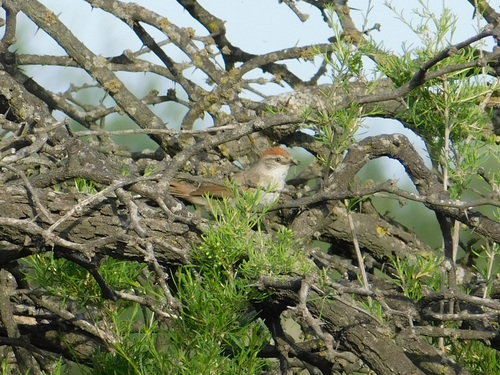
Red-faced Spinetail vs Pale-breasted Spinetail
Cranioleuca erythrops versus Synallaxis albescens
Play a quiz with Red-faced Spinetail and Pale-breasted Spinetail
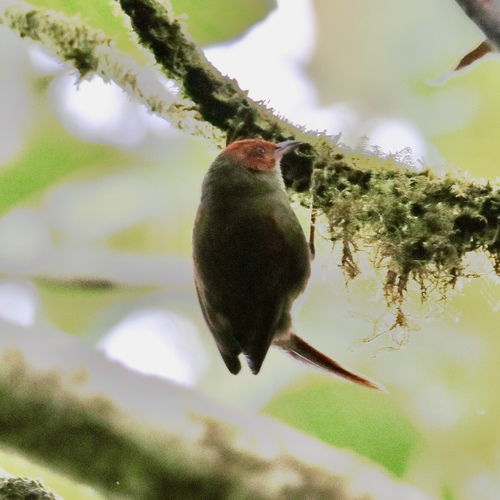
Red-faced Spinetail
Pale-breasted Spinetail
In short
The Red-faced Spinetail is best identified by its rufous head and contrasting gray body, while the Pale-breasted Spinetail is generally paler below with a brown tail. Both species belong to the same family but differ notably in plumage coloration and habitat preferences.
Identification tips
- Look for the rufous head of the Red-faced Spinetail; the Pale-breasted Spinetail lacks this feature. 2. Note the gray body of the Red-faced Spinetail versus the paler underparts of the Pale-breasted Spinetail. 3. Check the tail color: rufous in Red-faced, brown in Pale-breasted. 4. Observe habitat: Red-faced in forests, Pale-breasted in open areas.
Size
Both species are similar in size, typical of small spinetails.
Plumage
The Red-faced Spinetail has a distinctive rufous head and rufous wings and tail contrasting with a gray body. In contrast, the Pale-breasted Spinetail is paler below with a brown tail and rufous largely confined to the wing coverts.
Behaviour
Both species are active feeders, often joining mixed-species flocks. The Red-faced Spinetail tends to creep along branches, while the Pale-breasted Spinetail is more likely to be seen in open areas.
Habitat
The Red-faced Spinetail is found in forests and often joins mixed-species flocks, while the Pale-breasted Spinetail prefers open areas and avoids closed forests.
Voice
The Red-faced Spinetail has an excited, accelerating chipping series, while specific vocalizations for the Pale-breasted Spinetail are not detailed here.
Red-faced Spinetail · Pale-breasted Spinetail · My Tricky Birds