Birdr

Red-flanked Bluetail vs Red-breasted Flycatcher

Tarsiger cyanurus versus Ficedula parva

Play a quiz with Red-flanked Bluetail and Red-breasted Flycatcher
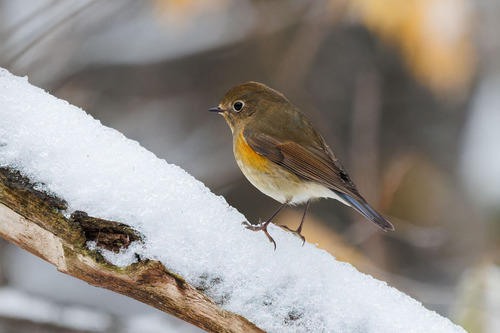
Red-flanked Bluetail (Tarsiger cyanurus) Red-flanked Bluetail
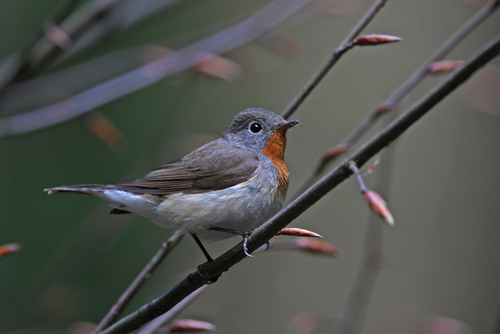
Red-breasted Flycatcher (Ficedula parva) Red-breasted Flycatcher

Media

Loading…

In short

The Red-flanked Bluetail and Red-breasted Flycatcher are both small, Old World flycatchers, but they can be distinguished by their plumage and behavior. The Red-flanked Bluetail has a distinctive blue tail and flanks, while the Red-breasted Flycatcher is noted for its reddish-orange throat in males. Both species are found in similar habitats, but their vocalizations and behaviors can aid in identification.

Identification tips

  1. Look for the blue tail and flanks of the Red-flanked Bluetail, especially in males. 2. Identify the reddish-orange throat in male Red-breasted Flycatchers. 3. Note the habitat: coniferous forests may suggest a bluetail, while deciduous woodlands might indicate a flycatcher. 4. Listen for vocal differences: a soft, high-pitched song for the bluetail versus a melodic trill for the flycatcher.

Size

Both species are similar in size, being small and compact flycatchers.

Plumage

The Red-flanked Bluetail has a blue tail and flanks, with a white belly and orange flanks. In contrast, the male Red-breasted Flycatcher displays a reddish-orange throat and a more subdued brownish-grey body. Females and juveniles of both species are duller, but the bluetail's blue tail remains a key identifier.

Behaviour

Both species exhibit typical flycatcher behavior, often seen perched and sallying for insects. However, the Red-flanked Bluetail may be more arboreal, while the Red-breasted Flycatcher can be seen lower in the understory.

Habitat

Both species inhabit forested areas, but the Red-flanked Bluetail is more associated with coniferous and mixed forests, while the Red-breasted Flycatcher prefers deciduous woodlands.

Voice

The Red-flanked Bluetail has a soft, high-pitched song and calls, while the Red-breasted Flycatcher produces a more varied and melodic song, often with a distinctive 'trill'.

Submit a better description

Use the same sections as the comparison. Your text is published immediately.

The Red-flanked Bluetail and Red-breasted Flycatcher are both small, Old World flycatchers, but they can be distinguished by their plumage and behavior. The Red-flanked Bluetail has a distinctive blue tail and flanks, while the Red-breasted Flycatcher is noted for its reddish-orange throat in males. Both species are found in similar habitats, but their vocalizations and behaviors can aid in identification.

  1. Look for the blue tail and flanks of the Red-flanked Bluetail, especially in males. 2. Identify the reddish-orange throat in male Red-breasted Flycatchers. 3. Note the habitat: coniferous forests may suggest a bluetail, while deciduous woodlands might indicate a flycatcher. 4. Listen for vocal differences: a soft, high-pitched song for the bluetail versus a melodic trill for the flycatcher.

Both species are similar in size, being small and compact flycatchers.

The Red-flanked Bluetail has a blue tail and flanks, with a white belly and orange flanks. In contrast, the male Red-breasted Flycatcher displays a reddish-orange throat and a more subdued brownish-grey body. Females and juveniles of both species are duller, but the bluetail's blue tail remains a key identifier.

Both species exhibit typical flycatcher behavior, often seen perched and sallying for insects. However, the Red-flanked Bluetail may be more arboreal, while the Red-breasted Flycatcher can be seen lower in the understory.

Both species inhabit forested areas, but the Red-flanked Bluetail is more associated with coniferous and mixed forests, while the Red-breasted Flycatcher prefers deciduous woodlands.

The Red-flanked Bluetail has a soft, high-pitched song and calls, while the Red-breasted Flycatcher produces a more varied and melodic song, often with a distinctive 'trill'.

Discard your changes?

You have unsaved edits. If you leave now, those changes will be lost.

Red-flanked Bluetail · Red-breasted Flycatcher · My Tricky Birds