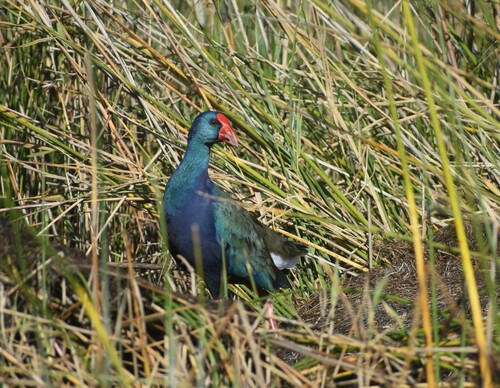
Red-knobbed Coot vs African Swamphen
Fulica cristata versus Porphyrio madagascariensis
Play a quiz with Red-knobbed Coot and African Swamphen
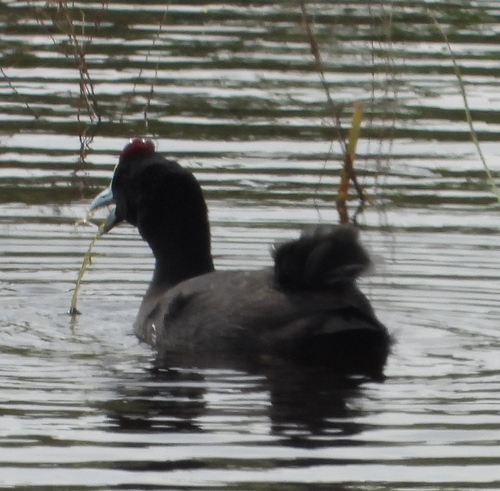
Red-knobbed Coot
African Swamphen
In short
The Red-knobbed Coot and the African Swamphen can be distinguished primarily by their bill and frontal shield. The Red-knobbed Coot has a white bill with distinctive red knobs on the frontal shield, while the African Swamphen has a bright red bill and frontal shield without knobs. Both species are found in similar wetland habitats, but their behaviors and vocalizations can also aid in identification.
Identification tips
- Frontal Shield: Look for the red knobs on the Red-knobbed Coot's frontal shield, absent in the African Swamphen.
- Bill Color: The Red-knobbed Coot has a white bill, while the African Swamphen's bill is bright red.
- Size and Shape: Note the larger size and more robust shape of the African Swamphen.
- Behavior: Observe the bird's behavior; the African Swamphen is more likely to be seen walking on vegetation.
- Vocalizations: Listen for the more melodious calls of the African Swamphen compared to the harsher calls of the Red-knobbed Coot.
Size
The African Swamphen is generally larger and more robust than the Red-knobbed Coot.
Plumage
The Red-knobbed Coot is mostly black with a white bill and red knobs on the frontal shield. In contrast, the African Swamphen has a more vibrant plumage with a purplish-blue body and a bright red bill and frontal shield.
Behaviour
Red-knobbed Coots are often seen swimming in open water, diving frequently. African Swamphens are more likely to be seen walking on floating vegetation or at the water's edge, often using their long toes to grasp vegetation.
Habitat
Both species inhabit wetlands, but the African Swamphen may also be found in reedbeds and marshy areas with dense vegetation, whereas the Red-knobbed Coot prefers open water bodies.
Voice
The Red-knobbed Coot has a variety of calls, often harsh and grating. The African Swamphen's calls are generally more melodious and include a range of cackles and whistles.