Red Knot vs Ruff
Calidris canutus versus Calidris pugnax
Play a quiz with Red Knot and Ruff
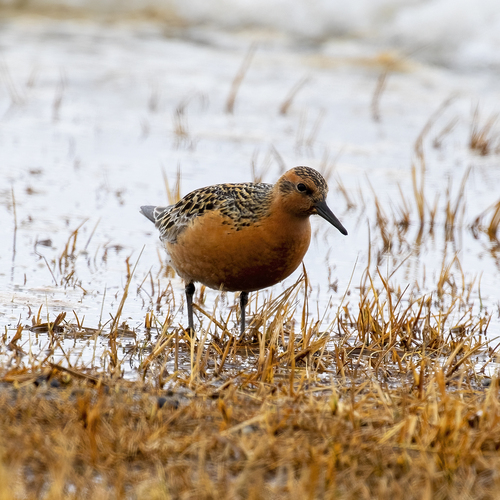
Red Knot
Ruff
In short
The Red Knot and Ruff are both medium-sized shorebirds but differ significantly in structure and plumage. The Red Knot is more compact with a straight, medium-length bill, while the Ruff has a slightly longer, more slender bill and a distinctive breeding plumage. Both species can be found in similar habitats during migration, but their behavior and vocalizations differ.
Identification tips
- Bill shape: Red Knot has a straight, medium-length bill; Ruff's bill is slightly longer and more slender. 2. Breeding plumage: Male Ruffs have a distinctive ruff of feathers; Red Knots do not. 3. Behavior: Look for lekking behavior in Ruffs during breeding season. 4. Habitat: Red Knots are more marine; Ruffs prefer freshwater wetlands. 5. Vocalizations: Listen for more varied calls from Ruffs.
Size
Both species are medium-sized, but the Ruff is slightly larger and more slender compared to the more compact Red Knot.
Plumage
In non-breeding plumage, the Red Knot is dull gray dorsally and white ventrally, lacking distinct markings. The Ruff, however, is more variable, with males displaying elaborate breeding plumage that includes a ruff of feathers around the neck. In winter, Ruffs are generally mottled brown with a paler belly.
Behaviour
Red Knots are known for their long-distance migrations and are often seen in large flocks. Ruffs, on the other hand, display unique lekking behavior during the breeding season, where males perform elaborate displays to attract females.
Habitat
Both species occupy coastal and wetland habitats during migration, but the Red Knot is more marine-oriented in the non-breeding season, while Ruffs are often found in freshwater wetlands and grasslands.
Voice
The Red Knot is generally quieter, with soft calls, while the Ruff may produce a variety of sounds, especially during the breeding season.