Birdr

Red-naped Sapsucker vs Red-breasted Sapsucker

Sphyrapicus nuchalis versus Sphyrapicus ruber

Play a quiz with Red-naped Sapsucker and Red-breasted Sapsucker
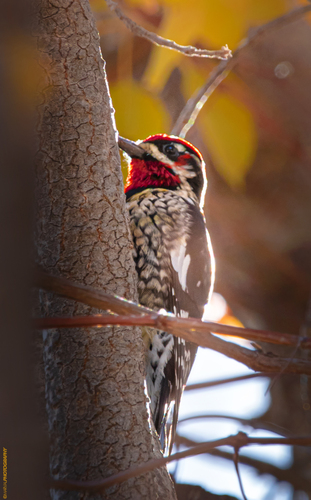
Red-naped Sapsucker (Sphyrapicus nuchalis) Red-naped Sapsucker
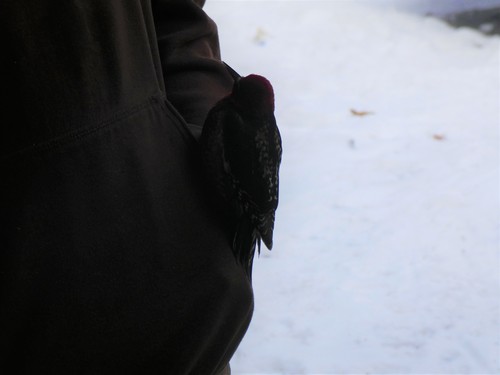
Red-breasted Sapsucker (Sphyrapicus ruber) Red-breasted Sapsucker

Media

Loading…

In short

The Red-naped Sapsucker and Red-breasted Sapsucker are similar woodpeckers often confused due to their overlapping ranges and similar plumage. The most reliable field mark is the presence of a distinct white stripe on the face of the Red-naped Sapsucker, which is absent in the Red-breasted Sapsucker. Both species share a similar structure, but subtle differences in plumage and habitat preferences can aid identification.

Identification tips

  1. Look for the white facial stripe on the Red-naped Sapsucker. 2. Check for the entirely red head and breast of the Red-breasted Sapsucker. 3. Consider habitat: Red-naped prefers mixed forests, Red-breasted favors coastal conifers. 4. Be cautious of hybrid zones where features may overlap.

Size

Both species are similar in size, typical of medium-sized woodpeckers.

Plumage

The Red-naped Sapsucker has a white stripe running from the bill through the eye, and a red nape patch, whereas the Red-breasted Sapsucker lacks the white facial stripe and has an entirely red head and breast. Both have black and white barring on the back and wings.

Behaviour

Both species exhibit similar sapsucker behavior, drilling rows of sap wells in trees and feeding on the sap and insects attracted to it.

Habitat

Red-naped Sapsuckers are often found in mixed coniferous and deciduous forests, while Red-breasted Sapsuckers prefer coastal forests with a higher presence of conifers.

Voice

Vocalizations are similar, consisting of a series of mewing calls and drumming, which can be difficult to distinguish in the field.

Submit a better description

Use the same sections as the comparison. Your text is published immediately.

The Red-naped Sapsucker and Red-breasted Sapsucker are similar woodpeckers often confused due to their overlapping ranges and similar plumage. The most reliable field mark is the presence of a distinct white stripe on the face of the Red-naped Sapsucker, which is absent in the Red-breasted Sapsucker. Both species share a similar structure, but subtle differences in plumage and habitat preferences can aid identification.

  1. Look for the white facial stripe on the Red-naped Sapsucker. 2. Check for the entirely red head and breast of the Red-breasted Sapsucker. 3. Consider habitat: Red-naped prefers mixed forests, Red-breasted favors coastal conifers. 4. Be cautious of hybrid zones where features may overlap.

Both species are similar in size, typical of medium-sized woodpeckers.

The Red-naped Sapsucker has a white stripe running from the bill through the eye, and a red nape patch, whereas the Red-breasted Sapsucker lacks the white facial stripe and has an entirely red head and breast. Both have black and white barring on the back and wings.

Both species exhibit similar sapsucker behavior, drilling rows of sap wells in trees and feeding on the sap and insects attracted to it.

Red-naped Sapsuckers are often found in mixed coniferous and deciduous forests, while Red-breasted Sapsuckers prefer coastal forests with a higher presence of conifers.

Vocalizations are similar, consisting of a series of mewing calls and drumming, which can be difficult to distinguish in the field.

Discard your changes?

You have unsaved edits. If you leave now, those changes will be lost.

Red-naped Sapsucker · Red-breasted Sapsucker · My Tricky Birds