Birdr

Red-necked Phalarope vs Peruvian Booby

Phalaropus lobatus versus Sula variegata

Play a quiz with Red-necked Phalarope and Peruvian Booby
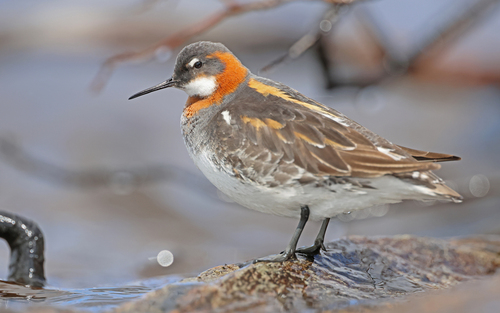
Red-necked Phalarope (Phalaropus lobatus) Red-necked Phalarope
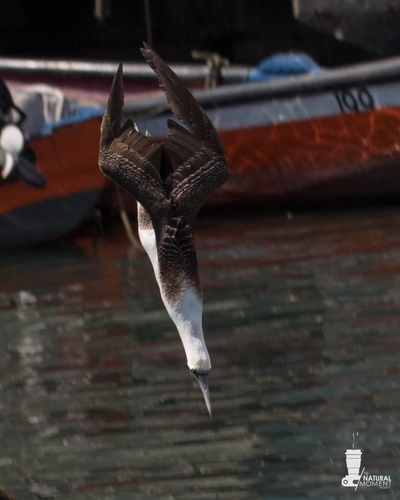
Peruvian Booby (Sula variegata) Peruvian Booby

Media

Loading…

In short

The Red-necked Phalarope is a small, delicate shorebird with a fine bill, often seen spinning on water surfaces, while the Peruvian Booby is a larger seabird with a robust bill, typically found along rocky coastlines. These species are not closely related and differ significantly in size, structure, and behavior.

Identification tips

1. Size and Structure: Red-necked Phalaropes are much smaller with fine bills, while Peruvian Boobies are larger with robust bills. 2. Behavior: Look for the spinning behavior of phalaropes on water versus the diving of boobies. 3. Habitat: Phalaropes are often seen on open water, whereas boobies are found on rocky shores. 4. Plumage: Note the black eye-patches of the phalarope compared to the more uniform plumage of the booby.

Size

The Red-necked Phalarope is much smaller and more delicate than the Peruvian Booby, which is a larger and more robust seabird.

Plumage

Red-necked Phalaropes in non-breeding plumage are largely white with gray mantles and black eye-patches, while Peruvian Boobies have a more uniform grayish-white body with darker wings and a distinctive facial pattern.

Behaviour

Red-necked Phalaropes are known for their unique spinning behavior on water to feed, whereas Peruvian Boobies are often seen diving from heights to catch fish.

Habitat

Red-necked Phalaropes are found in open ocean or inland water bodies during migration, while Peruvian Boobies are typically found along rocky coastlines and islands.

Submit a better description

Use the same sections as the comparison. Your text is published immediately.

The Red-necked Phalarope is a small, delicate shorebird with a fine bill, often seen spinning on water surfaces, while the Peruvian Booby is a larger seabird with a robust bill, typically found along rocky coastlines. These species are not closely related and differ significantly in size, structure, and behavior.

1. Size and Structure: Red-necked Phalaropes are much smaller with fine bills, while Peruvian Boobies are larger with robust bills. 2. Behavior: Look for the spinning behavior of phalaropes on water versus the diving of boobies. 3. Habitat: Phalaropes are often seen on open water, whereas boobies are found on rocky shores. 4. Plumage: Note the black eye-patches of the phalarope compared to the more uniform plumage of the booby.

The Red-necked Phalarope is much smaller and more delicate than the Peruvian Booby, which is a larger and more robust seabird.

Red-necked Phalaropes in non-breeding plumage are largely white with gray mantles and black eye-patches, while Peruvian Boobies have a more uniform grayish-white body with darker wings and a distinctive facial pattern.

Red-necked Phalaropes are known for their unique spinning behavior on water to feed, whereas Peruvian Boobies are often seen diving from heights to catch fish.

Red-necked Phalaropes are found in open ocean or inland water bodies during migration, while Peruvian Boobies are typically found along rocky coastlines and islands.

Discard your changes?

You have unsaved edits. If you leave now, those changes will be lost.

Red-necked Phalarope · Peruvian Booby · My Tricky Birds