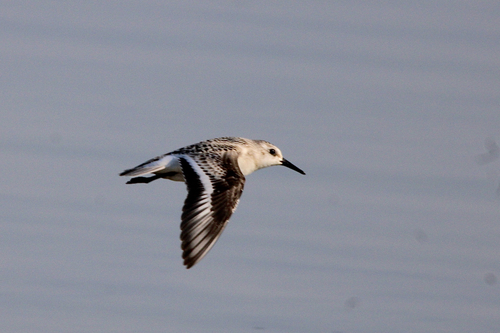
Red-necked Stint vs Sanderling
Calidris ruficollis versus Calidris alba
Play a quiz with Red-necked Stint and Sanderling
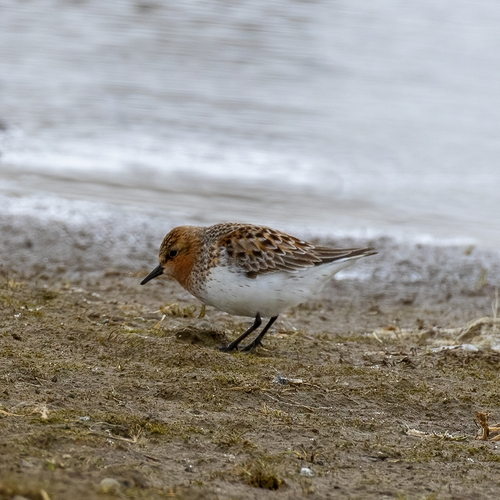
Red-necked Stint
Sanderling
In short
The Red-necked Stint and Sanderling are both small shorebirds, but they can be distinguished by size and plumage. The Sanderling is larger and lacks the red neck of the Red-necked Stint during breeding season. Both species are found in similar coastal habitats during migration and winter.
Identification tips
- Size: Look for the larger size of the Sanderling.
- Breeding Plumage: Check for the red neck of the Red-necked Stint during breeding season.
- Habitat: Note the preference for sandy beaches by Sanderlings versus mudflats for Red-necked Stints.
- Behavior: Observe the Sanderling's wave-chasing behavior compared to the more static foraging of the Red-necked Stint.
Size
The Sanderling is larger and more robust compared to the smaller, more delicate Red-necked Stint.
Plumage
In breeding plumage, the Red-necked Stint has a distinctive red neck and face, while the Sanderling remains pale with a grayish back and white underparts. Outside of breeding season, both species show more muted colors, but the Sanderling is generally paler overall.
Behaviour
Sanderlings are often seen running along the water's edge, chasing waves, while Red-necked Stints are more likely to be found foraging in mudflats or shallow water.
Habitat
Both species frequent coastal areas, but the Sanderling is more commonly found on sandy beaches, while the Red-necked Stint prefers mudflats and estuaries.
Voice
Both species have similar high-pitched calls, but specific vocal differences are not well-documented in the provided sources.