Birdr

Red-shouldered Hawk vs Broad-winged Hawk

Buteo lineatus versus Buteo platypterus

Play a quiz with Red-shouldered Hawk and Broad-winged Hawk
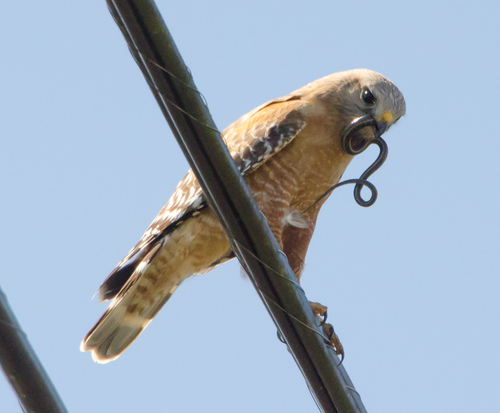
Red-shouldered Hawk (Buteo lineatus) Red-shouldered Hawk
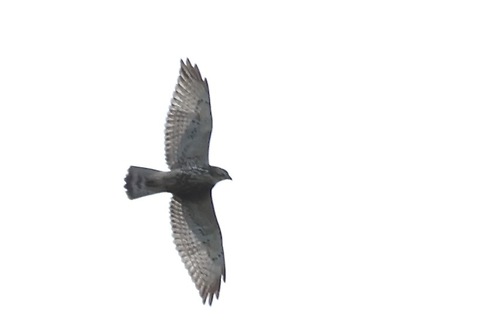
Broad-winged Hawk (Buteo platypterus) Broad-winged Hawk

Media

Loading…

In short

Juvenile Red-shouldered and Broad-winged Hawks are most often confused in flight, but can be separated by tail length and wing shape: Red-shouldered shows a distinctly longer tail and more crescent-shaped pale markings in the primaries, while Broad-winged has a shorter, squarer tail and broader, more pointed wings. Adults are easier: Red-shouldered Hawks have rich rufous barring on the chest and a warm red 'shoulder' patch, while Broad-winged Hawks show a clean white belly with horizontal barring and lack the rufous tones. Structure is also key—Red-shouldered is lankier with longer wings and tail, while Broad-winged is compact and broad-winged. Both can overlap in range and season, especially during migration, so careful attention to these details is essential.

Identification tips

  1. Juvenile tail length and shape: In flight, juvenile Red-shouldered Hawks show a distinctly longer, more rounded tail with multiple narrow white bands; Broad-winged juveniles have a shorter, squarer tail with fewer, broader white bands. This is often the quickest way to separate them in flight.
  2. Pale crescent in primaries (juvenile and adult Red-shouldered): Look for translucent pale crescents near the wingtips (primaries) from below—these are present in Red-shouldered of all ages but absent in Broad-winged.
  3. Wing shape: Broad-winged Hawks have shorter, broader wings with a more pointed/tapered look, giving them a compact appearance; Red-shouldered Hawks have longer, narrower wings for their size, contributing to a lankier jizz.
  4. Adult chest color: Adult Red-shouldered Hawks have a rich rufous chest with fine reddish barring, while Broad-winged adults have a clean white belly and chest with horizontal brown barring.
  5. 'Shoulder' patch: Only Red-shouldered Hawks show a prominent rufous patch on the upperwing coverts (the 'shoulder'), visible when perched and sometimes in flight. Broad-winged lacks this mark.
  6. Tail banding (adult): Adult Broad-winged Hawks have 2–3 broad white tail bands (base, tip, sometimes middle), while Red-shouldered has more numerous, narrower white bars.
  7. Underwing pattern: Red-shouldered Hawks (all ages) show more heavily barred wings above and below, while Broad-winged has less barring and lacks the pale crescents.
  8. Flight style: Red-shouldered Hawks flap more frequently and with a snappier, Accipiter-like flight; Broad-winged tends to soar more steadily with less flapping.
  9. Perched structure: Red-shouldered appears longer-tailed and more upright; Broad-winged is compact, short-tailed, and often looks hunched.
  10. Leg color: Red-shouldered Hawks have long, bright yellow legs; this is less obvious in Broad-winged due to their shorter tarsi.
  11. Regional variation: Western Red-shouldered Hawks are more rufous overall; Florida birds are paler. Broad-winged has rare dark morphs, but these are much less likely to be confused with Red-shouldered due to overall darkness and lack of rufous.
  12. Seasonal context: If seen in winter in the US (outside Florida or the Caribbean), Broad-winged is very unlikely—most migrate south. Red-shouldered is resident in much of its range.
  13. Migration context: Large flocks (kettles) in migration are almost always Broad-winged Hawks; Red-shouldered migrates singly or in small groups.
  14. Habitat: Red-shouldered prefers wooded wetlands and riparian areas; Broad-winged is more often in upland deciduous or mixed forests.
  15. Pitfalls: Juvenile Red-shouldered can be confused with juvenile Broad-winged, but always check tail length, wing crescents, and overall structure. Adult plumage is much more distinctive between the two.

Size

Red-shouldered Hawk is noticeably larger and longer-proportioned than Broad-winged Hawk. The average body mass for Red-shouldered is about 625.5g, while Broad-winged is lighter (265–560g). Red-shouldered is also longer (males 38–58 cm, females up to 61 cm) with a wingspan of 90–127 cm, compared to Broad-winged's 32–44 cm length and 74–100 cm wingspan. The Red-shouldered's tail is especially longer (16–24 cm vs. Broad-winged's 14.5–19 cm), and its tarsus is longer as well. In the field, Red-shouldered appears lankier and more elongated, while Broad-winged is compact and stocky.

Plumage

For juveniles and immatures, focus on tail and wing pattern in flight: Red-shouldered Hawks have a longer, more heavily barred tail and show translucent pale crescents near the wingtips (especially visible from below), while Broad-winged Hawks have a shorter, squarer tail with fewer, broader white bands and lack the strong pale crescents. Juvenile Red-shouldered are more streaked below, while juvenile Broad-winged are paler with more vertical streaking and less rufous. Adult Red-shouldered Hawks stand out with their rich reddish barring on the chest, pale belly with reddish bars, and a prominent rufous 'shoulder' patch visible when perched. Their upperparts are dark with pale spots, and the wings are heavily barred above. Adult Broad-winged Hawks, in contrast, have a dark brown back, a clean white belly and chest with horizontal barring, and a tail with 2–3 broad white bands (one at the base, one at the tip, and sometimes one in the middle). They lack the rufous tones and 'shoulder' patch of Red-shouldered. Dark morph Broad-winged Hawks are rare and much darker overall, but still lack the rufous and the pale crescents in the wings.

Behaviour

Red-shouldered Hawks often flap more in flight, with a style reminiscent of Accipiters, and may be seen soaring or gliding but with more frequent wingbeats. Broad-winged Hawks are more likely to soar steadily and are famous for migrating in large flocks (kettles), especially in fall. Red-shouldered Hawks are usually solitary or in small groups, even during migration. When perched, Red-shouldered sits more upright and appears longer-tailed, while Broad-winged looks more compact and hunched.

Habitat

Both species overlap in eastern North America, especially during migration. Red-shouldered Hawks prefer mature forests near water, wooded swamps, and riparian corridors, and are year-round residents in much of their range except the far north. Broad-winged Hawks breed in deciduous or mixed forests, often away from water, and are highly migratory—most leave North America for Central and South America in winter. Broad-winged is less likely to be found in winter in the US except in the far south or Caribbean. During migration, Broad-winged is more likely to be seen in open areas and at hawk watch sites.

Submit a better description

Use the same sections as the comparison. Your text is published immediately.

Juvenile Red-shouldered and Broad-winged Hawks are most often confused in flight, but can be separated by tail length and wing shape: Red-shouldered shows a distinctly longer tail and more crescent-shaped pale markings in the primaries, while Broad-winged has a shorter, squarer tail and broader, more pointed wings. Adults are easier: Red-shouldered Hawks have rich rufous barring on the chest and a warm red 'shoulder' patch, while Broad-winged Hawks show a clean white belly with horizontal barring and lack the rufous tones. Structure is also key—Red-shouldered is lankier with longer wings and tail, while Broad-winged is compact and broad-winged. Both can overlap in range and season, especially during migration, so careful attention to these details is essential.

  1. Juvenile tail length and shape: In flight, juvenile Red-shouldered Hawks show a distinctly longer, more rounded tail with multiple narrow white bands; Broad-winged juveniles have a shorter, squarer tail with fewer, broader white bands. This is often the quickest way to separate them in flight.
  2. Pale crescent in primaries (juvenile and adult Red-shouldered): Look for translucent pale crescents near the wingtips (primaries) from below—these are present in Red-shouldered of all ages but absent in Broad-winged.
  3. Wing shape: Broad-winged Hawks have shorter, broader wings with a more pointed/tapered look, giving them a compact appearance; Red-shouldered Hawks have longer, narrower wings for their size, contributing to a lankier jizz.
  4. Adult chest color: Adult Red-shouldered Hawks have a rich rufous chest with fine reddish barring, while Broad-winged adults have a clean white belly and chest with horizontal brown barring.
  5. 'Shoulder' patch: Only Red-shouldered Hawks show a prominent rufous patch on the upperwing coverts (the 'shoulder'), visible when perched and sometimes in flight. Broad-winged lacks this mark.
  6. Tail banding (adult): Adult Broad-winged Hawks have 2–3 broad white tail bands (base, tip, sometimes middle), while Red-shouldered has more numerous, narrower white bars.
  7. Underwing pattern: Red-shouldered Hawks (all ages) show more heavily barred wings above and below, while Broad-winged has less barring and lacks the pale crescents.
  8. Flight style: Red-shouldered Hawks flap more frequently and with a snappier, Accipiter-like flight; Broad-winged tends to soar more steadily with less flapping.
  9. Perched structure: Red-shouldered appears longer-tailed and more upright; Broad-winged is compact, short-tailed, and often looks hunched.
  10. Leg color: Red-shouldered Hawks have long, bright yellow legs; this is less obvious in Broad-winged due to their shorter tarsi.
  11. Regional variation: Western Red-shouldered Hawks are more rufous overall; Florida birds are paler. Broad-winged has rare dark morphs, but these are much less likely to be confused with Red-shouldered due to overall darkness and lack of rufous.
  12. Seasonal context: If seen in winter in the US (outside Florida or the Caribbean), Broad-winged is very unlikely—most migrate south. Red-shouldered is resident in much of its range.
  13. Migration context: Large flocks (kettles) in migration are almost always Broad-winged Hawks; Red-shouldered migrates singly or in small groups.
  14. Habitat: Red-shouldered prefers wooded wetlands and riparian areas; Broad-winged is more often in upland deciduous or mixed forests.
  15. Pitfalls: Juvenile Red-shouldered can be confused with juvenile Broad-winged, but always check tail length, wing crescents, and overall structure. Adult plumage is much more distinctive between the two.

Red-shouldered Hawk is noticeably larger and longer-proportioned than Broad-winged Hawk. The average body mass for Red-shouldered is about 625.5g, while Broad-winged is lighter (265–560g). Red-shouldered is also longer (males 38–58 cm, females up to 61 cm) with a wingspan of 90–127 cm, compared to Broad-winged's 32–44 cm length and 74–100 cm wingspan. The Red-shouldered's tail is especially longer (16–24 cm vs. Broad-winged's 14.5–19 cm), and its tarsus is longer as well. In the field, Red-shouldered appears lankier and more elongated, while Broad-winged is compact and stocky.

For juveniles and immatures, focus on tail and wing pattern in flight: Red-shouldered Hawks have a longer, more heavily barred tail and show translucent pale crescents near the wingtips (especially visible from below), while Broad-winged Hawks have a shorter, squarer tail with fewer, broader white bands and lack the strong pale crescents. Juvenile Red-shouldered are more streaked below, while juvenile Broad-winged are paler with more vertical streaking and less rufous. Adult Red-shouldered Hawks stand out with their rich reddish barring on the chest, pale belly with reddish bars, and a prominent rufous 'shoulder' patch visible when perched. Their upperparts are dark with pale spots, and the wings are heavily barred above. Adult Broad-winged Hawks, in contrast, have a dark brown back, a clean white belly and chest with horizontal barring, and a tail with 2–3 broad white bands (one at the base, one at the tip, and sometimes one in the middle). They lack the rufous tones and 'shoulder' patch of Red-shouldered. Dark morph Broad-winged Hawks are rare and much darker overall, but still lack the rufous and the pale crescents in the wings.

Red-shouldered Hawks often flap more in flight, with a style reminiscent of Accipiters, and may be seen soaring or gliding but with more frequent wingbeats. Broad-winged Hawks are more likely to soar steadily and are famous for migrating in large flocks (kettles), especially in fall. Red-shouldered Hawks are usually solitary or in small groups, even during migration. When perched, Red-shouldered sits more upright and appears longer-tailed, while Broad-winged looks more compact and hunched.

Both species overlap in eastern North America, especially during migration. Red-shouldered Hawks prefer mature forests near water, wooded swamps, and riparian corridors, and are year-round residents in much of their range except the far north. Broad-winged Hawks breed in deciduous or mixed forests, often away from water, and are highly migratory—most leave North America for Central and South America in winter. Broad-winged is less likely to be found in winter in the US except in the far south or Caribbean. During migration, Broad-winged is more likely to be seen in open areas and at hawk watch sites.

Discard your changes?

You have unsaved edits. If you leave now, those changes will be lost.

Red-shouldered Hawk · Broad-winged Hawk · My Tricky Birds