Birdr

Red-throated Diver vs Pelagic Cormorant

Gavia stellata versus Urile pelagicus

Play a quiz with Red-throated Diver and Pelagic Cormorant
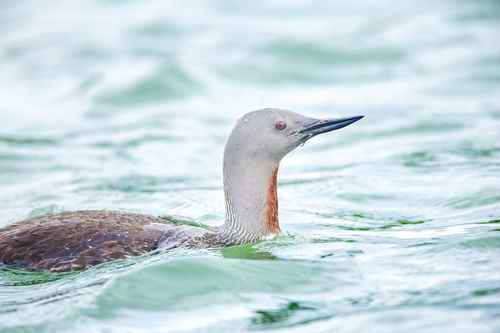
Red-throated Diver (Gavia stellata) Red-throated Diver
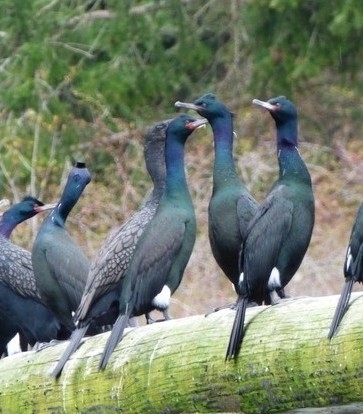
Pelagic Cormorant (Urile pelagicus) Pelagic Cormorant

Media

Loading…

In short

The Red-throated Diver and Pelagic Cormorant can be distinguished by their habitat preferences and plumage. The Diver is typically found in freshwater lakes during breeding and coastal waters in winter, while the Cormorant is more marine-oriented year-round. Key visual differences include the Diver's red throat patch during breeding and the Cormorant's slender, dark body.

Identification tips

Size

The Red-throated Diver is generally smaller and more slender than the Pelagic Cormorant.

Plumage

The Red-throated Diver has a distinctive red throat patch during the breeding season and a mostly gray body. In contrast, the Pelagic Cormorant has a dark, glossy plumage with a greenish sheen and lacks any red throat patch.

Behaviour

The Red-throated Diver is a central-place forager, flying between breeding and feeding areas, while the Pelagic Cormorant is often seen drying its wings on rocks and is more sensitive to disturbances.

Habitat

The Red-throated Diver breeds on small arctic and boreal lakes and winters along coasts, whereas the Pelagic Cormorant is found in marine environments, often near rocky shores.

Voice

The Red-throated Diver has a cacophonous call during breeding, while the Pelagic Cormorant's vocalizations are less well-documented but generally quieter.

Submit a better description

Use the same sections as the comparison. Your text is published immediately.

The Red-throated Diver and Pelagic Cormorant can be distinguished by their habitat preferences and plumage. The Diver is typically found in freshwater lakes during breeding and coastal waters in winter, while the Cormorant is more marine-oriented year-round. Key visual differences include the Diver's red throat patch during breeding and the Cormorant's slender, dark body.

  • Look for the red throat patch on the Diver during breeding season.
  • Observe habitat: freshwater lakes for Divers, marine areas for Cormorants.
  • Note behavior: Divers fly between feeding and breeding areas; Cormorants dry wings on rocks.
  • Consider size and shape: Divers are smaller and more slender.

The Red-throated Diver is generally smaller and more slender than the Pelagic Cormorant.

The Red-throated Diver has a distinctive red throat patch during the breeding season and a mostly gray body. In contrast, the Pelagic Cormorant has a dark, glossy plumage with a greenish sheen and lacks any red throat patch.

The Red-throated Diver is a central-place forager, flying between breeding and feeding areas, while the Pelagic Cormorant is often seen drying its wings on rocks and is more sensitive to disturbances.

The Red-throated Diver breeds on small arctic and boreal lakes and winters along coasts, whereas the Pelagic Cormorant is found in marine environments, often near rocky shores.

The Red-throated Diver has a cacophonous call during breeding, while the Pelagic Cormorant's vocalizations are less well-documented but generally quieter.

Discard your changes?

You have unsaved edits. If you leave now, those changes will be lost.

Red-throated Diver · Pelagic Cormorant · My Tricky Birds