Birdr

Red-throated Wryneck vs Olive Woodpecker

Jynx ruficollis versus Dendropicos griseocephalus

Play a quiz with Red-throated Wryneck and Olive Woodpecker
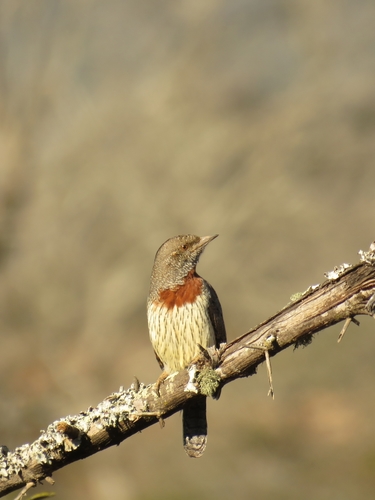
Red-throated Wryneck (Jynx ruficollis) Red-throated Wryneck
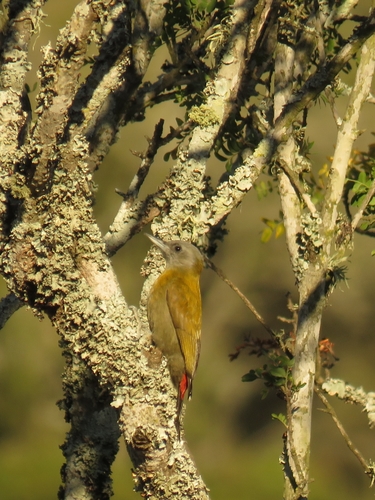
Olive Woodpecker (Dendropicos griseocephalus) Olive Woodpecker

Media

Loading…

In short

The Red-throated Wryneck and Olive Woodpecker can be distinguished by their plumage and behavior. The Red-throated Wryneck has a distinctive rufous throat patch and a more cryptic, barred appearance, while the Olive Woodpecker features a more uniform olive coloration with a red belly. Both species are woodpeckers, but their vocalizations and habitats can also aid in identification.

Identification tips

  1. Look for the rufous throat and barred pattern for Red-throated Wryneck. 2. Note the uniform olive color and red belly for Olive Woodpecker. 3. Observe behavior: twisting neck movements suggest a wryneck. 4. Consider habitat: open areas for wrynecks, dense forests for Olive Woodpeckers. 5. Listen for distinct vocal patterns, especially if visual cues are unclear.

Size

Both species are similar in size, typical of small to medium-sized woodpeckers.

Plumage

The Red-throated Wryneck has a rufous throat patch and a barred body, giving it a more camouflaged look. In contrast, the Olive Woodpecker is uniformly olive with a noticeable red belly, lacking the barred pattern of the wryneck.

Behaviour

Red-throated Wrynecks often exhibit a characteristic twisting motion of the neck, especially when disturbed. Olive Woodpeckers are more typical in their woodpecker behavior, often seen climbing tree trunks and branches.

Habitat

Red-throated Wrynecks are typically found in open woodlands and savannas, while Olive Woodpeckers prefer denser forests and wooded areas.

Voice

The vocalizations of these species differ, with the Red-throated Wryneck having a series of high-pitched notes, while the Olive Woodpecker's calls are less documented but expected to be more typical of woodpeckers.

Submit a better description

Use the same sections as the comparison. Your text is published immediately.

The Red-throated Wryneck and Olive Woodpecker can be distinguished by their plumage and behavior. The Red-throated Wryneck has a distinctive rufous throat patch and a more cryptic, barred appearance, while the Olive Woodpecker features a more uniform olive coloration with a red belly. Both species are woodpeckers, but their vocalizations and habitats can also aid in identification.

  1. Look for the rufous throat and barred pattern for Red-throated Wryneck. 2. Note the uniform olive color and red belly for Olive Woodpecker. 3. Observe behavior: twisting neck movements suggest a wryneck. 4. Consider habitat: open areas for wrynecks, dense forests for Olive Woodpeckers. 5. Listen for distinct vocal patterns, especially if visual cues are unclear.

Both species are similar in size, typical of small to medium-sized woodpeckers.

The Red-throated Wryneck has a rufous throat patch and a barred body, giving it a more camouflaged look. In contrast, the Olive Woodpecker is uniformly olive with a noticeable red belly, lacking the barred pattern of the wryneck.

Red-throated Wrynecks often exhibit a characteristic twisting motion of the neck, especially when disturbed. Olive Woodpeckers are more typical in their woodpecker behavior, often seen climbing tree trunks and branches.

Red-throated Wrynecks are typically found in open woodlands and savannas, while Olive Woodpeckers prefer denser forests and wooded areas.

The vocalizations of these species differ, with the Red-throated Wryneck having a series of high-pitched notes, while the Olive Woodpecker's calls are less documented but expected to be more typical of woodpeckers.

Discard your changes?

You have unsaved edits. If you leave now, those changes will be lost.

Red-throated Wryneck · Olive Woodpecker · My Tricky Birds