Birdr

Redwing vs Clay-coloured Thrush

Turdus iliacus versus Turdus grayi

Play a quiz with Redwing and Clay-coloured Thrush
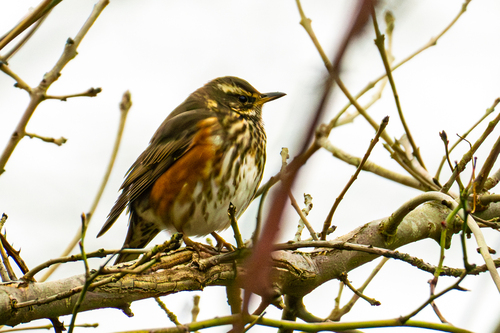
Redwing (Turdus iliacus) Redwing
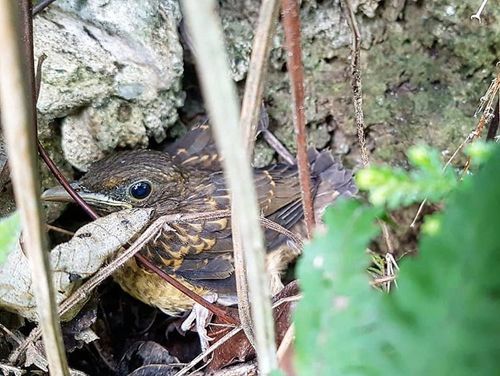
Clay-coloured Thrush (Turdus grayi) Clay-coloured Thrush

Media

Loading…

In short

The Redwing (Turdus iliacus) is best identified by its red flanks and underwing coverts and a prominent buffy-white supercilium, while the Clay-colored Thrush (Turdus grayi) lacks these features and is more uniformly brown. Both are thrushes, but their plumage and habitats are distinct.

Identification tips

Look for the red flanks and underwing coverts and buffy-white supercilium on the Redwing. In contrast, the Clay-colored Thrush is uniformly brown. Consider habitat: Redwings prefer more natural settings, while Clay-colored Thrushes are often near human habitation.

Size

Both species are similar in size, typical of medium-sized thrushes, but the Clay-colored Thrush may appear slightly bulkier.

Plumage

The Redwing has distinctive red flanks and underwing coverts, along with a buffy-white supercilium. The Clay-colored Thrush is more uniformly brown without the red flanks or prominent supercilium.

Behaviour

The Clay-colored Thrush is often found in lightly wooded areas and is more accustomed to human presence, while the Redwing is more elusive and typically found in more natural settings.

Habitat

Redwings are often found in open woodlands and forest edges, especially in Europe and Asia, while Clay-colored Thrushes are common in lightly wooded areas and urban settings in Central America.

Voice

The Redwing's song is a series of high-pitched notes, while the Clay-colored Thrush has a more melodious and varied song. Calls are less distinctive but can be used with experience.

Submit a better description

Use the same sections as the comparison. Your text is published immediately.

The Redwing (Turdus iliacus) is best identified by its red flanks and underwing coverts and a prominent buffy-white supercilium, while the Clay-colored Thrush (Turdus grayi) lacks these features and is more uniformly brown. Both are thrushes, but their plumage and habitats are distinct.

Look for the red flanks and underwing coverts and buffy-white supercilium on the Redwing. In contrast, the Clay-colored Thrush is uniformly brown. Consider habitat: Redwings prefer more natural settings, while Clay-colored Thrushes are often near human habitation.

Both species are similar in size, typical of medium-sized thrushes, but the Clay-colored Thrush may appear slightly bulkier.

The Redwing has distinctive red flanks and underwing coverts, along with a buffy-white supercilium. The Clay-colored Thrush is more uniformly brown without the red flanks or prominent supercilium.

The Clay-colored Thrush is often found in lightly wooded areas and is more accustomed to human presence, while the Redwing is more elusive and typically found in more natural settings.

Redwings are often found in open woodlands and forest edges, especially in Europe and Asia, while Clay-colored Thrushes are common in lightly wooded areas and urban settings in Central America.

The Redwing's song is a series of high-pitched notes, while the Clay-colored Thrush has a more melodious and varied song. Calls are less distinctive but can be used with experience.

Discard your changes?

You have unsaved edits. If you leave now, those changes will be lost.

Redwing · Clay-coloured Thrush · My Tricky Birds