Birdr

Reed Cormorant vs Village Indigobird

Microcarbo africanus versus Vidua chalybeata

Play a quiz with Reed Cormorant and Village Indigobird

Reed Cormorant (Microcarbo africanus) Reed Cormorant
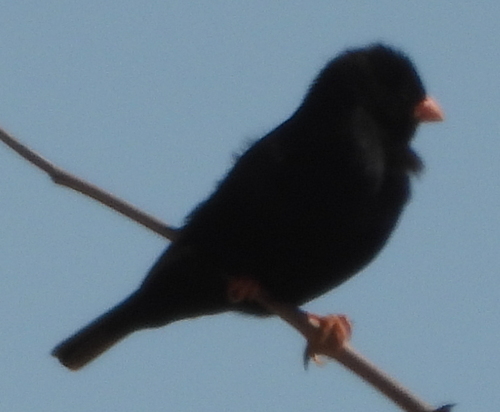
Village Indigobird (Vidua chalybeata) Village Indigobird

Media

Loading…

In short

The Reed Cormorant and Village Indigobird are easily distinguished by their size and habitat preferences. The Reed Cormorant is a waterbird with a slender body and long neck, often found near water bodies, while the Village Indigobird is a small, finch-like bird typically seen in open grasslands and near human settlements.

Identification tips

  1. Size and Shape: Look for the larger size and long neck of the Reed Cormorant versus the small, finch-like Village Indigobird. 2. Habitat: Check the surroundings; cormorants are near water, indigobirds in open, grassy areas. 3. Plumage: Note the glossy dark plumage of the cormorant compared to the indigobird's blue-black or brownish tones. 4. Behavior: Observe behavior; cormorants may spread wings to dry, indigobirds may mimic calls.

Size

The Reed Cormorant is significantly larger, with a long neck and body, compared to the much smaller and compact Village Indigobird.

Plumage

Reed Cormorants have dark plumage with a glossy sheen, whereas Village Indigobirds are small, with males having a glossy blue-black plumage and females being brownish.

Behaviour

Reed Cormorants are often seen swimming or perched near water, sometimes with wings spread to dry. Village Indigobirds are more likely to be seen perched on wires or hopping on the ground in open areas.

Habitat

Reed Cormorants inhabit wetlands, rivers, and lakes, while Village Indigobirds are found in grasslands, savannas, and near villages.

Voice

Reed Cormorants are generally silent, while Village Indigobirds have a distinctive song, often mimicking the calls of their host species.

Submit a better description

Use the same sections as the comparison. Your text is published immediately.

The Reed Cormorant and Village Indigobird are easily distinguished by their size and habitat preferences. The Reed Cormorant is a waterbird with a slender body and long neck, often found near water bodies, while the Village Indigobird is a small, finch-like bird typically seen in open grasslands and near human settlements.

  1. Size and Shape: Look for the larger size and long neck of the Reed Cormorant versus the small, finch-like Village Indigobird. 2. Habitat: Check the surroundings; cormorants are near water, indigobirds in open, grassy areas. 3. Plumage: Note the glossy dark plumage of the cormorant compared to the indigobird's blue-black or brownish tones. 4. Behavior: Observe behavior; cormorants may spread wings to dry, indigobirds may mimic calls.

The Reed Cormorant is significantly larger, with a long neck and body, compared to the much smaller and compact Village Indigobird.

Reed Cormorants have dark plumage with a glossy sheen, whereas Village Indigobirds are small, with males having a glossy blue-black plumage and females being brownish.

Reed Cormorants are often seen swimming or perched near water, sometimes with wings spread to dry. Village Indigobirds are more likely to be seen perched on wires or hopping on the ground in open areas.

Reed Cormorants inhabit wetlands, rivers, and lakes, while Village Indigobirds are found in grasslands, savannas, and near villages.

Reed Cormorants are generally silent, while Village Indigobirds have a distinctive song, often mimicking the calls of their host species.

Discard your changes?

You have unsaved edits. If you leave now, those changes will be lost.

Reed Cormorant · Village Indigobird · My Tricky Birds