Birdr

Rifleman vs Bush Wren

Acanthisitta chloris versus Xenicus longipes

Play a quiz with Rifleman and Bush Wren
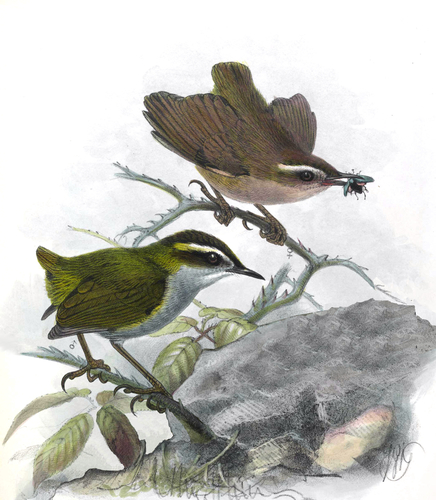
Rifleman (Acanthisitta chloris) Rifleman
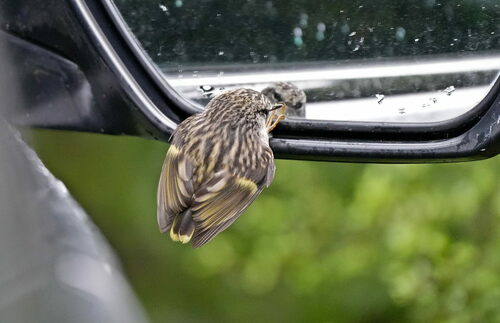
Bush Wren (Xenicus longipes) Bush Wren

Media

Loading…

In short

The Rifleman and Bush Wren are both small, insectivorous birds endemic to New Zealand. The most reliable field mark is the bill structure: the Rifleman has a finer, more needle-like bill compared to the Bush Wren's slightly stouter bill. Both species are similar in size and plumage, making behavior and habitat key in distinguishing them.

Identification tips

  1. Bill shape: Look for the Rifleman's finer, needle-like bill. 2. Behavior: Observe foraging habits; Riflemen creep on tree trunks, while Bush Wrens were more ground-oriented. 3. Habitat: Consider the forest type; Riflemen are more versatile in habitat choice. 4. Vocalizations: Listen for the Rifleman's high-pitched calls.

Size

Both species are tiny, with the Rifleman being slightly smaller and more delicate in appearance.

Plumage

Plumage is similar; both have greenish-brown upperparts and paler underparts. The Rifleman may appear slightly brighter, but this is not a reliable field mark.

Behaviour

Riflemen are often seen actively foraging on tree trunks and branches, moving in a creeping manner similar to nuthatches. Bush Wrens, now extinct, were known to forage more on the ground and in dense undergrowth.

Habitat

Riflemen are found in a variety of forested habitats, including beech and podocarp forests. Bush Wrens were historically found in dense, lowland forests and shrublands.

Voice

Riflemen have a high-pitched, insect-like call. Bush Wren vocalizations are less documented due to their extinction, but were described as soft and less piercing.

Submit a better description

Use the same sections as the comparison. Your text is published immediately.

The Rifleman and Bush Wren are both small, insectivorous birds endemic to New Zealand. The most reliable field mark is the bill structure: the Rifleman has a finer, more needle-like bill compared to the Bush Wren's slightly stouter bill. Both species are similar in size and plumage, making behavior and habitat key in distinguishing them.

  1. Bill shape: Look for the Rifleman's finer, needle-like bill. 2. Behavior: Observe foraging habits; Riflemen creep on tree trunks, while Bush Wrens were more ground-oriented. 3. Habitat: Consider the forest type; Riflemen are more versatile in habitat choice. 4. Vocalizations: Listen for the Rifleman's high-pitched calls.

Both species are tiny, with the Rifleman being slightly smaller and more delicate in appearance.

Plumage is similar; both have greenish-brown upperparts and paler underparts. The Rifleman may appear slightly brighter, but this is not a reliable field mark.

Riflemen are often seen actively foraging on tree trunks and branches, moving in a creeping manner similar to nuthatches. Bush Wrens, now extinct, were known to forage more on the ground and in dense undergrowth.

Riflemen are found in a variety of forested habitats, including beech and podocarp forests. Bush Wrens were historically found in dense, lowland forests and shrublands.

Riflemen have a high-pitched, insect-like call. Bush Wren vocalizations are less documented due to their extinction, but were described as soft and less piercing.

Discard your changes?

You have unsaved edits. If you leave now, those changes will be lost.

Rifleman · Bush Wren · My Tricky Birds