Birdr

Rock Kestrel vs Greater Kestrel

Falco rupicolus versus Falco rupicoloides

Play a quiz with Rock Kestrel and Greater Kestrel
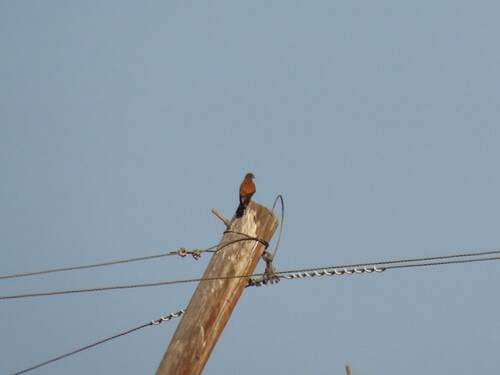
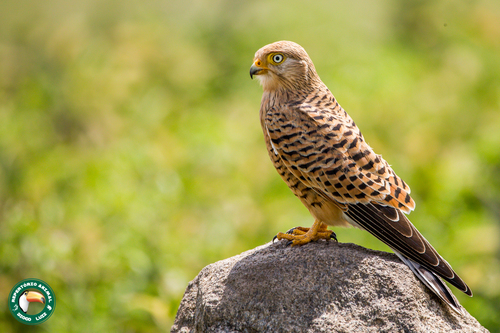
Rock Kestrel (Falco rupicolus) Rock Kestrel
Greater Kestrel (Falco rupicoloides) Greater Kestrel

Media

Loading…

In short

The Rock Kestrel and Greater Kestrel are both medium-sized falcons, but the Greater Kestrel is notably larger and paler. Key differences include the Greater Kestrel's distinctive pale head with bold streaks and the Rock Kestrel's more uniform rufous upperparts.

Identification tips

  1. Look for size: Greater Kestrel is larger and bulkier. 2. Check head pattern: Greater Kestrel has a pale head with bold streaks. 3. Observe plumage: Rock Kestrel has more uniform rufous upperparts. 4. Consider habitat: Rock Kestrel in rocky areas, Greater Kestrel in savannas. 5. Listen for calls: Rock Kestrel's rapid 'kik-kik-kik'.

Size

The Greater Kestrel is larger and bulkier than the Rock Kestrel.

Plumage

The Rock Kestrel has rufous upperparts with dark spotting, while the Greater Kestrel is paler with a distinctive pale head and bold streaks. Both have barred tails, but the Greater Kestrel's tail is longer.

Behaviour

Both species exhibit typical kestrel behavior, such as hovering while hunting, but the Greater Kestrel may appear more sluggish due to its larger size.

Habitat

Both species inhabit open areas, but the Rock Kestrel is more often found in rocky and mountainous regions, whereas the Greater Kestrel prefers open savannas and grasslands.

Voice

Both species have similar calls, but the Rock Kestrel's call is a rapid 'kik-kik-kik', while the Greater Kestrel's call is less well-documented.

Submit a better description

Use the same sections as the comparison. Your text is published immediately.

The Rock Kestrel and Greater Kestrel are both medium-sized falcons, but the Greater Kestrel is notably larger and paler. Key differences include the Greater Kestrel's distinctive pale head with bold streaks and the Rock Kestrel's more uniform rufous upperparts.

  1. Look for size: Greater Kestrel is larger and bulkier. 2. Check head pattern: Greater Kestrel has a pale head with bold streaks. 3. Observe plumage: Rock Kestrel has more uniform rufous upperparts. 4. Consider habitat: Rock Kestrel in rocky areas, Greater Kestrel in savannas. 5. Listen for calls: Rock Kestrel's rapid 'kik-kik-kik'.

The Greater Kestrel is larger and bulkier than the Rock Kestrel.

The Rock Kestrel has rufous upperparts with dark spotting, while the Greater Kestrel is paler with a distinctive pale head and bold streaks. Both have barred tails, but the Greater Kestrel's tail is longer.

Both species exhibit typical kestrel behavior, such as hovering while hunting, but the Greater Kestrel may appear more sluggish due to its larger size.

Both species inhabit open areas, but the Rock Kestrel is more often found in rocky and mountainous regions, whereas the Greater Kestrel prefers open savannas and grasslands.

Both species have similar calls, but the Rock Kestrel's call is a rapid 'kik-kik-kik', while the Greater Kestrel's call is less well-documented.

Discard your changes?

You have unsaved edits. If you leave now, those changes will be lost.

Rock Kestrel · Greater Kestrel · My Tricky Birds