Birdr

Rock-loving Cisticola vs Cut-throat

Cisticola aberrans versus Amadina fasciata

Play a quiz with Rock-loving Cisticola and Cut-throat

Rock-loving Cisticola (Cisticola aberrans) Rock-loving Cisticola
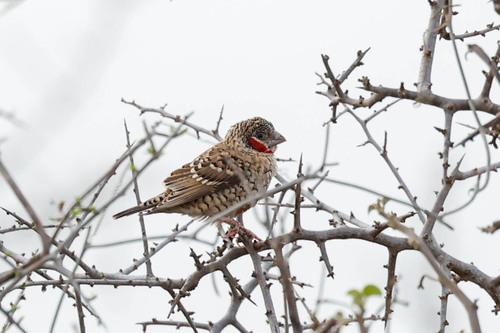
Cut-throat (Amadina fasciata) Cut-throat

Media

Loading…

In short

The Rock-loving Cisticola and Cut-throat are easily distinguished by their bill shape and plumage patterns. The Cisticola has a slender, insect-eating bill, while the Cut-throat features a thicker, seed-eating bill and a distinctive red throat band in males. Both species occupy different habitats, aiding in identification.

Identification tips

  1. Look for the bill shape: slender in Cisticolas, thicker in Cut-throats. 2. Check for the red throat band in male Cut-throats. 3. Observe the habitat: rocky areas suggest Cisticola, open woodlands suggest Cut-throat. 4. Note the behavior: Cisticolas flit low, Cut-throats may be in flocks on the ground.

Size

The Rock-loving Cisticola is smaller and more delicate than the Cut-throat, which is more robust.

Plumage

The Rock-loving Cisticola has a generally plain and streaked appearance, typical of cisticolas, while the Cut-throat is more striking with its bold red throat band in males and overall more colorful plumage.

Behaviour

Cisticolas are often seen flitting low in vegetation, while Cut-throats may be observed feeding on the ground in flocks.

Habitat

Rock-loving Cisticolas are typically found in rocky, open areas with sparse vegetation, whereas Cut-throats prefer savannahs and open woodlands.

Voice

The Rock-loving Cisticola's song is a series of high-pitched notes, while the Cut-throat's vocalizations are softer and more varied.

Submit a better description

Use the same sections as the comparison. Your text is published immediately.

The Rock-loving Cisticola and Cut-throat are easily distinguished by their bill shape and plumage patterns. The Cisticola has a slender, insect-eating bill, while the Cut-throat features a thicker, seed-eating bill and a distinctive red throat band in males. Both species occupy different habitats, aiding in identification.

  1. Look for the bill shape: slender in Cisticolas, thicker in Cut-throats. 2. Check for the red throat band in male Cut-throats. 3. Observe the habitat: rocky areas suggest Cisticola, open woodlands suggest Cut-throat. 4. Note the behavior: Cisticolas flit low, Cut-throats may be in flocks on the ground.

The Rock-loving Cisticola is smaller and more delicate than the Cut-throat, which is more robust.

The Rock-loving Cisticola has a generally plain and streaked appearance, typical of cisticolas, while the Cut-throat is more striking with its bold red throat band in males and overall more colorful plumage.

Cisticolas are often seen flitting low in vegetation, while Cut-throats may be observed feeding on the ground in flocks.

Rock-loving Cisticolas are typically found in rocky, open areas with sparse vegetation, whereas Cut-throats prefer savannahs and open woodlands.

The Rock-loving Cisticola's song is a series of high-pitched notes, while the Cut-throat's vocalizations are softer and more varied.

Discard your changes?

You have unsaved edits. If you leave now, those changes will be lost.

Rock-loving Cisticola · Cut-throat · My Tricky Birds