Birdr

Rock Ptarmigan vs Western Capercaillie

Lagopus muta versus Tetrao urogallus

Play a quiz with Rock Ptarmigan and Western Capercaillie
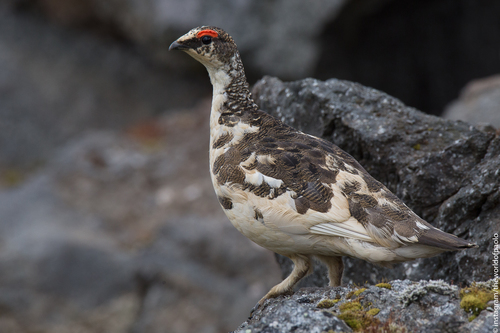
Rock Ptarmigan (Lagopus muta) Rock Ptarmigan
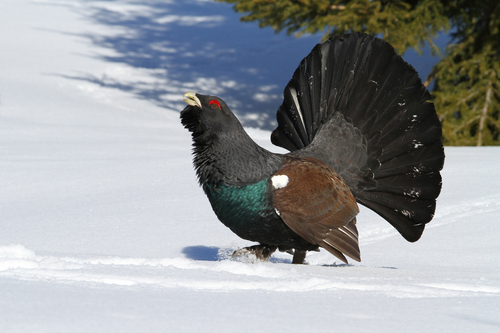
Western Capercaillie (Tetrao urogallus) Western Capercaillie

Media

Loading…

In short

Rock Ptarmigan and Western Capercaillie differ significantly in size and habitat. Rock Ptarmigan undergoes dramatic seasonal plumage changes, while Western Capercaillie is a large, non-migratory grouse of coniferous forests.

Identification tips

Look for the size difference: Western Capercaillie is much larger. In spring and summer, check for Rock Ptarmigan's seasonal plumage change and the well-camouflaged females during nesting. Observe the habitat: Rock Ptarmigan in alpine areas, Western Capercaillie in coniferous forests.

Size

Western Capercaillie is significantly larger than Rock Ptarmigan.

Plumage

Rock Ptarmigan displays a dramatic seasonal plumage change from white to dark brown, with females camouflaged during nesting. Western Capercaillie males and females are distinguishable, but the notes do not specify their plumage differences.

Behaviour

Rock Ptarmigan males are territorial and visible from a distance, while Western Capercaillie males do not participate in raising young and family groups dissolve by late summer.

Habitat

Rock Ptarmigan is found in arctic and alpine environments, whereas Western Capercaillie inhabits coniferous forests across western Eurasia.

Submit a better description

Use the same sections as the comparison. Your text is published immediately.

Rock Ptarmigan and Western Capercaillie differ significantly in size and habitat. Rock Ptarmigan undergoes dramatic seasonal plumage changes, while Western Capercaillie is a large, non-migratory grouse of coniferous forests.

Look for the size difference: Western Capercaillie is much larger. In spring and summer, check for Rock Ptarmigan's seasonal plumage change and the well-camouflaged females during nesting. Observe the habitat: Rock Ptarmigan in alpine areas, Western Capercaillie in coniferous forests.

Western Capercaillie is significantly larger than Rock Ptarmigan.

Rock Ptarmigan displays a dramatic seasonal plumage change from white to dark brown, with females camouflaged during nesting. Western Capercaillie males and females are distinguishable, but the notes do not specify their plumage differences.

Rock Ptarmigan males are territorial and visible from a distance, while Western Capercaillie males do not participate in raising young and family groups dissolve by late summer.

Rock Ptarmigan is found in arctic and alpine environments, whereas Western Capercaillie inhabits coniferous forests across western Eurasia.

Discard your changes?

You have unsaved edits. If you leave now, those changes will be lost.

Rock Ptarmigan · Western Capercaillie · My Tricky Birds