Birdr

Rock Sparrow vs White-winged Snowfinch

Petronia petronia versus Montifringilla nivalis

Play a quiz with Rock Sparrow and White-winged Snowfinch
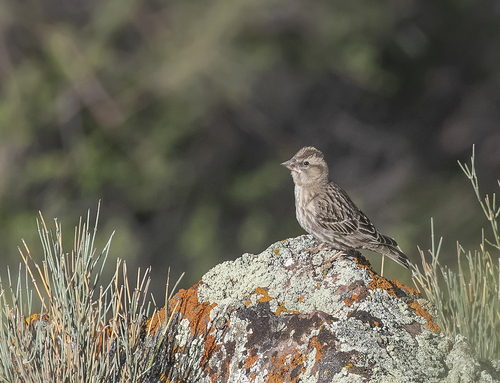
Rock Sparrow (Petronia petronia) Rock Sparrow
White-winged Snowfinch (Montifringilla nivalis) White-winged Snowfinch

Media

Loading…

In short

The Rock Sparrow and White-winged Snowfinch can be distinguished by their wing patterns and habitat preferences. The Rock Sparrow has a more muted appearance with less contrast, while the Snowfinch is notable for its striking white wing patches, especially in flight.

Identification tips

Size

Both species are similar in size, but the White-winged Snowfinch may appear slightly bulkier.

Plumage

The Rock Sparrow has a streaked brown back and a distinctive yellow throat patch, which can be subtle. In contrast, the White-winged Snowfinch has a more contrasting plumage with white wing patches and a generally paler overall appearance.

Behaviour

The Rock Sparrow often forages on the ground or low vegetation, while the White-winged Snowfinch is more likely to be seen in open, rocky areas and may exhibit more aerial foraging behavior.

Habitat

Rock Sparrows are typically found in dry, rocky areas with sparse vegetation, often at lower elevations. White-winged Snowfinches prefer high-altitude, alpine environments with open, rocky terrain.

Voice

The Rock Sparrow's song is a series of chirps and trills, while the White-winged Snowfinch has a more varied and melodic song. However, vocalizations can be difficult to distinguish without experience.

Submit a better description

Use the same sections as the comparison. Your text is published immediately.

The Rock Sparrow and White-winged Snowfinch can be distinguished by their wing patterns and habitat preferences. The Rock Sparrow has a more muted appearance with less contrast, while the Snowfinch is notable for its striking white wing patches, especially in flight.

  • Look for white wing patches in the White-winged Snowfinch, especially in flight.
  • Check throat color: Rock Sparrows have a yellow throat patch, though it can be subtle.
  • Consider habitat: Snowfinches are more likely in alpine areas, while Rock Sparrows prefer lower, rocky regions.
  • Observe behavior: Snowfinches may be more aerial and in open rocky areas, whereas Rock Sparrows are often on the ground or in low vegetation.

Both species are similar in size, but the White-winged Snowfinch may appear slightly bulkier.

The Rock Sparrow has a streaked brown back and a distinctive yellow throat patch, which can be subtle. In contrast, the White-winged Snowfinch has a more contrasting plumage with white wing patches and a generally paler overall appearance.

The Rock Sparrow often forages on the ground or low vegetation, while the White-winged Snowfinch is more likely to be seen in open, rocky areas and may exhibit more aerial foraging behavior.

Rock Sparrows are typically found in dry, rocky areas with sparse vegetation, often at lower elevations. White-winged Snowfinches prefer high-altitude, alpine environments with open, rocky terrain.

The Rock Sparrow's song is a series of chirps and trills, while the White-winged Snowfinch has a more varied and melodic song. However, vocalizations can be difficult to distinguish without experience.

Discard your changes?

You have unsaved edits. If you leave now, those changes will be lost.

Rock Sparrow · White-winged Snowfinch · My Tricky Birds